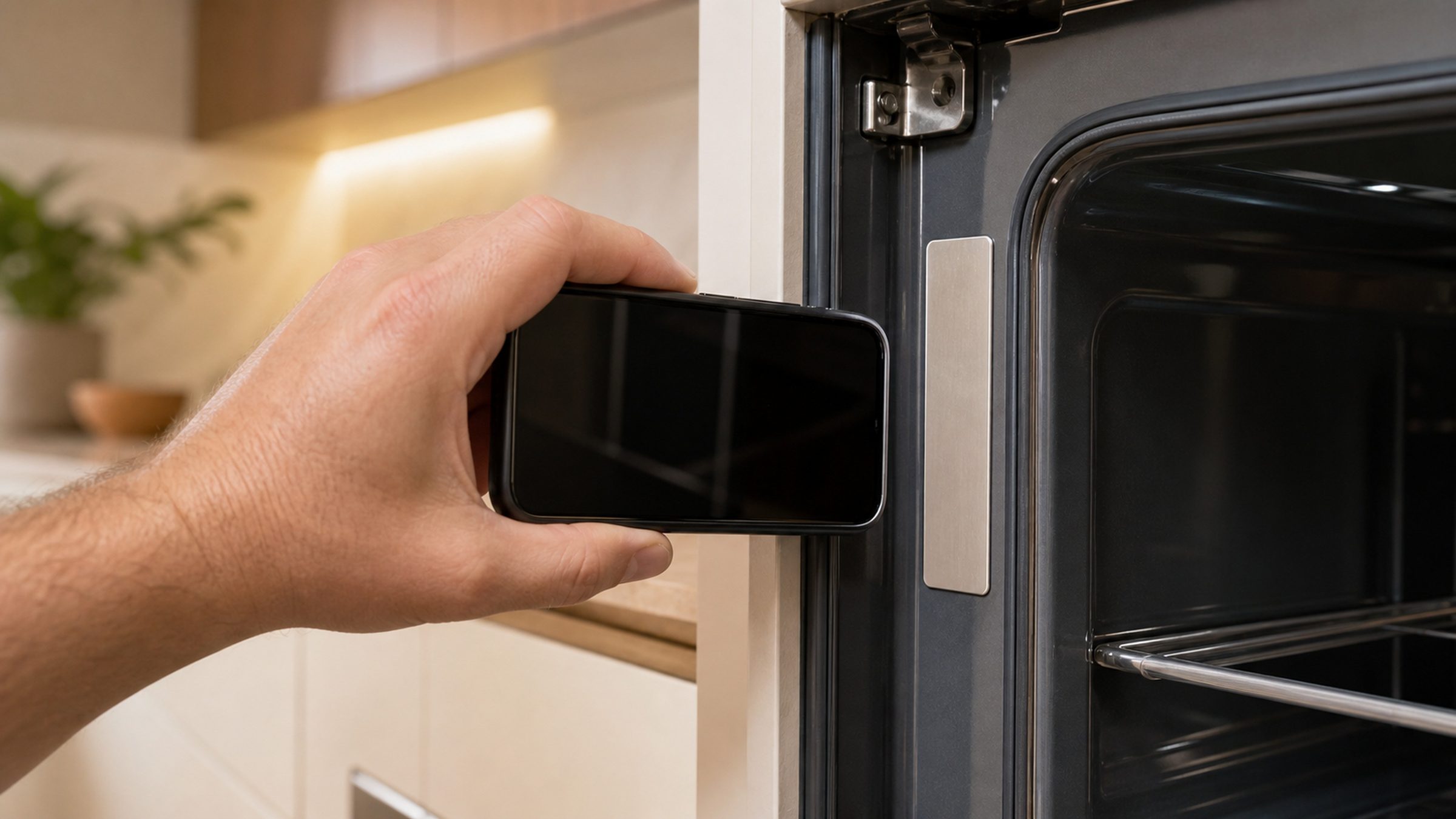
Maintenance & Prevention
The Filter Light Is Still On After You Changed the Filter. Here Is Why
The filter light on a JennAir refrigerator counts water used. It does not test the cartridge, it cannot see it, and it has no way of knowing that a new one has gone in. So it will keep asking until somebody resets it by hand. Seat the new cartridge fully — most turn a quarter to a half turn and stop with a click you can feel — then press and hold the key the panel marks for the filter for about three seconds, until the indicator changes color or goes out. Then run two to four quarts through the dispenser to clear the air, which is what makes the first few glasses spit and look cloudy. If the light will not clear at all, the cartridge is usually not fully seated rather than the panel being broken.
The full guide
How to reset filter light on Jenn Air refrigerator: it is a counter, not a sensor
That one sentence is the whole answer, and almost nothing written about refrigerator filter lights says it plainly.
The light on the front of your refrigerator is not looking at the cartridge. It cannot see it, cannot test it, and has no idea whether the one in there is six months old or six minutes old. What it does is count water — every glass from the dispenser, every batch of ice — and switch itself on when the total reaches a set figure.
The counter runs faster in South Florida than the six months on the box assumes, because a house that makes ice all summer pushes far more water through the cartridge than one that does not.
So when you change the filter, nothing happens. The counter keeps counting from where it was. The light keeps asking. And the perfectly reasonable conclusion — *something must be wrong with my refrigerator* — is exactly wrong.
You have to tell it.
The Three Seconds
- Seat the new cartridge fully. Most of them turn a quarter to a half turn and stop with a click you can feel through your hand. This step is where the whole procedure usually goes wrong, and a cartridge that is *nearly* in behaves in every way like a cartridge that is not in.
- Press and hold the filter pad for about three seconds. The pad varies by model and the panel marks it — sometimes a filter icon, sometimes a word, sometimes it shares a key with something else. Hold it until the indicator changes color or goes out. Do not tap it repeatedly; that is a different input.
- Run two to four quarts through the dispenser.
That is it. There is no menu, no service mode and no sequence of buttons.
The Cloudy First Glass
Almost everybody who changes a filter calls somebody about the next part, so it is worth saying in advance: the water will spit, sputter and look cloudy for the first few glasses.
That is air. A new cartridge arrives full of it, and the only way out is through your dispenser. Two to four quarts clears it. Throw the first two batches of ice for the same reason.
Cloudy water that clears from the bottom of the glass upward as you watch is air. Cloudy water that stays cloudy is something else, and that is worth a call.
When the Reset Genuinely Will Not Take
Before anybody blames the panel:
- Take the cartridge out and put it back. Firmly, until it stops. This is the answer far more often than a control problem is.
- Check you are holding the right pad. On models where the filter shares a key, a short press does something else entirely.
- Try a full minute at the breaker, then the reset again. A control that has locked up after an outage — and this city produces plenty — will refuse inputs while looking completely normal.
If it still will not clear with a properly seated cartridge and a freshly restarted control, then it is worth a visit. That is genuinely rare, and it is the fourth thing to try rather than the first.
What a Filter Actually Costs You If You Ignore It
Nothing dramatic, and that is why it gets ignored. A cartridge past its life restricts flow rather than failing, so what you notice is:
- the dispenser has got slower without any single day where it stopped;
- the ice has gone cloudy and soft, because a slower fill freezes differently and traps what a faster one pushes out;
- the ice maker makes less than it used to.
Every one of those reads as an appliance problem and is a five-minute cartridge change. It is the cheapest thing on this entire site.
The One That Is Not About the Light
While you have the cartridge out, look at the housing it screws into. A slow weep there is the single most common way water gets under a refrigerator, and because it runs down the back of the cabinet rather than out onto the floor, it is usually discovered by a damp cabinet base rather than by a puddle.
Dry it, put the new cartridge in, and look again in a week. If it is wet, that is a real repair and a small one, and it is worth doing before the cabinetry pays for it.
What to Have Ready When You Call
The model number from the upper left wall inside the fresh-food side, when the cartridge was last changed, and whether the ice has changed as well as the water. Those three answers separate a filter question from a water-path repair before anybody drives anywhere.
We repair this equipment across Miami-Dade, Broward and Palm Beach.
If it turns out to be a repair
What this leads to, and what it costs
Every job on this site is priced the same way: an on-site diagnostic first, the figure agreed in writing before anybody starts.
-
from $155 Refrigerator water & dispenser repair
Water on the floor, an ice maker that has stopped, a dispenser that dribbles or nothing at all. One inlet valve and one filter usually feed both, which is why this is one job rather than two.
- The whole water path followed: supply, valve, filter, line, maker
- A frozen fill tube ruled out before any part is ordered
- Leaks traced rather than mopped
-
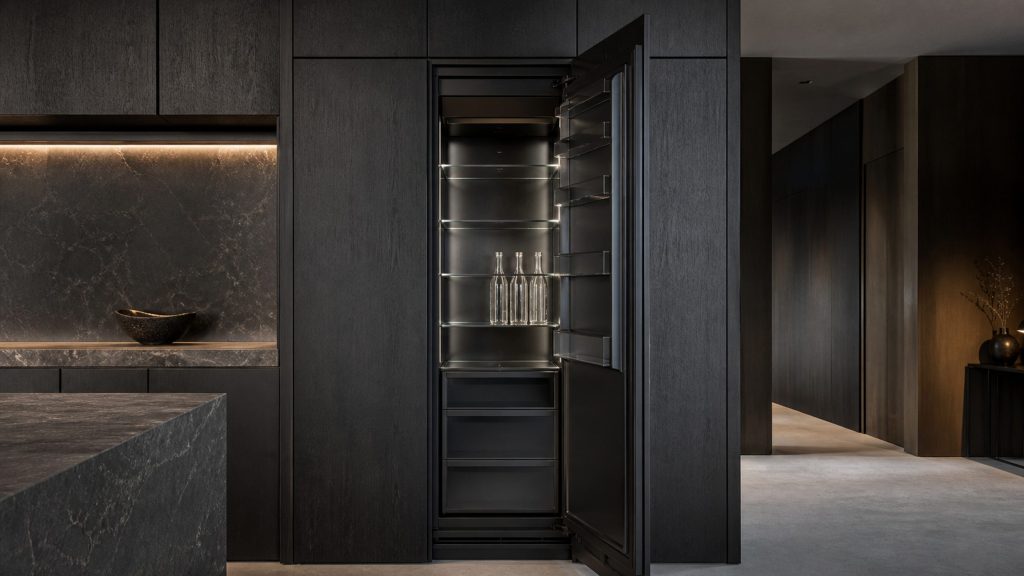
Built-in · Column · French door · Undercounter · Drawers · Beverage centers · 18"–48" Refrigerators
The largest row in this line and the one this phone rings about most. Built-in cabinets and panel-ready columns from 18 to 48 inches, French door, the undercounter units that live in an island or a bar run, refrigerated drawers and beverage centers. Most of them are trimmed into your cabinetry, which is the first thing we need to know.
- The refrigerator drifting warm while the freezer holds
- Water on the floor, or ice building where it should not
- A cabinet running constantly and never quite getting there
Questions people ask about this
Why does the light come on when the filter is fine?
Because it is not measuring the filter. It counts the water that has gone through the dispenser and the ice maker, and it turns on at a set volume regardless of what condition the cartridge is actually in. That is why it comes on for a household that barely uses the dispenser and stays off for one that does — the counter is the only thing it knows about.
Do I have to use the maker's own cartridge?
No, and we will not pretend otherwise. What we will say is that a poorly made cartridge is one of the more common causes of two separate problems — restricted flow, which shows up as a slow dispenser and worse ice, and a slow weep at the housing, which nobody notices until the cabinet base is damp. The price difference is small against a service call. Decide on that basis rather than on ours.
The water spits and looks cloudy since the change.
Air in the new cartridge, and it is expected. Run two to four quarts through the dispenser and throw the first two batches of ice. If it is still spitting after that, the cartridge is probably not seated fully — take it out and put it back firmly.
The light will not reset no matter how long I hold it.
Reseat the cartridge before assuming the panel. A cartridge sitting a fraction proud is the usual reason, and on some models the control will not accept the reset until it sees the correct flow. If it still refuses with the cartridge properly home, that is worth a look — but it is the last thing on the list, not the first.
How often should the cartridge actually be changed?
Six months is the usual published interval, and in this water there is no reason to stretch it. What matters more than the calendar is what the water is doing: a dispenser that has slowed noticeably, or ice that has gone cloudy and soft, is a cartridge at the end of its life whatever the light says.
Maintenance & Prevention
More guides like this one
-
Running It Empty With Vinegar Will Not Fix the Smell. Here Is What Does
Every remedy people try fails for the same reason: the two places holding the smell are the two places the wash arms cannot reach.
Read more -
Nine Appliances, Nine Places the Plate Hides
On a built-in kitchen nothing has a visible back, and half of these plates need a phone held into a cabinet at an angle you cannot see. Here is where each one is, and why a photograph beats writing it down.
Read more -
A Two-Minute Test That Can Save You a $695 Repair
A tired door seal produces every symptom of a failed sealed system — a cabinet that will not hold temperature, condensation, frost where there should be none, a compressor that never stops. It costs a fraction as much to fix, and a banknote finds it in two minutes.
Read more
Tell us the model number and what it is doing.
This article is based on:
- Official manufacturer documentation
- Internal repair procedures
- Technician repair history
- Company quality standards