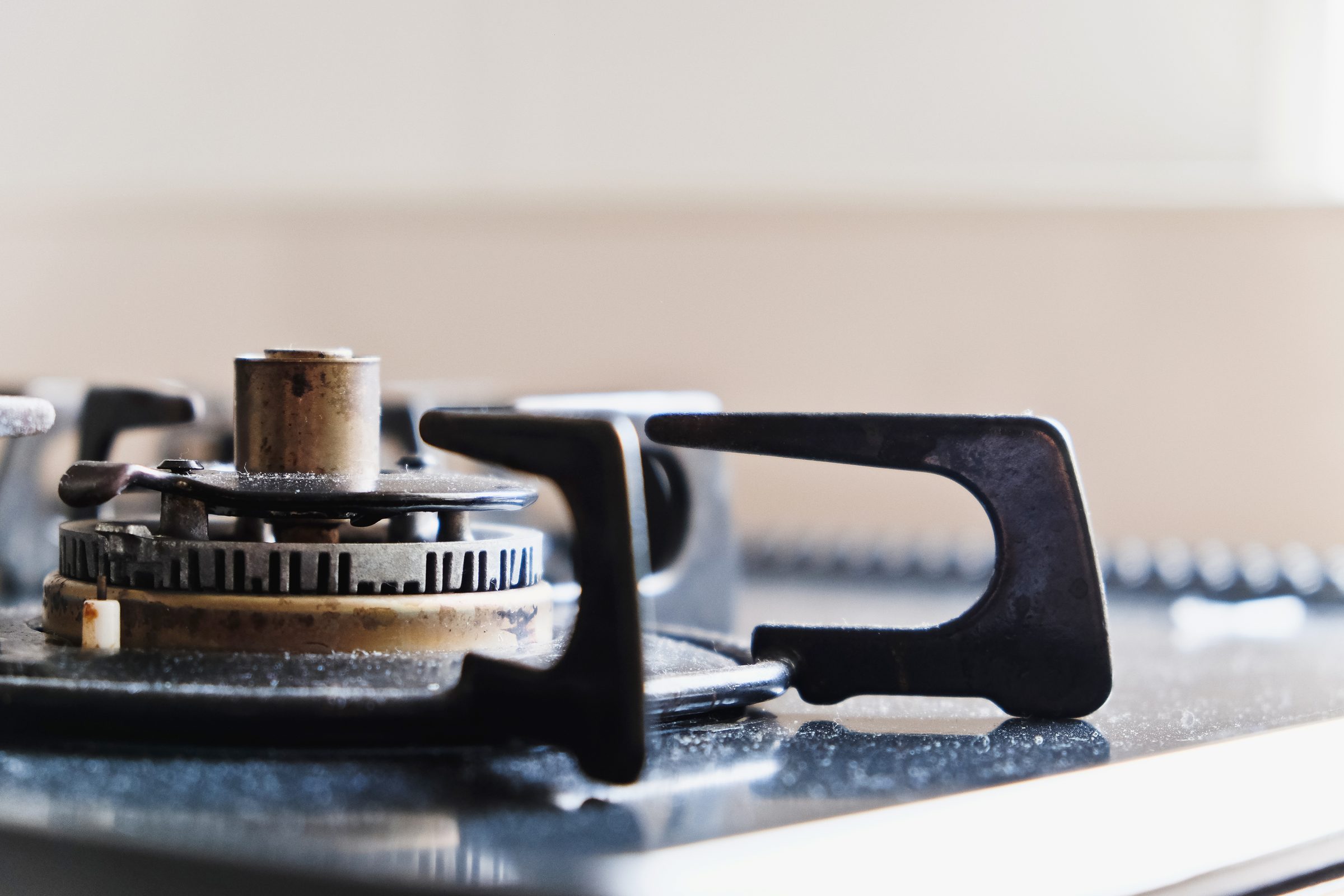
- “Clicking and clicking with nothing lighting”
- “It lights and then goes out a minute later”
- “The high flame is fine and the simmer will not hold”
Symptom
JennAir a burner will not light
Clicking with no flame, a flame that goes out on its own, or a simmer that will not hold while the high flame is perfect. On a dual-stacked burner that last one is its own diagnosis, because there are two rings of flame under one grate.
- From $95 diagnostic, credited to the repair
- 59 cities and neighborhoods covered
- OEM parts available on order
- In writing the price, before anything is opened
Five ordinary causes
What this usually turns out to be
Cheapest and commonest first, which is also the order we check them in. They sit hundreds of dollars apart, and only the unit settles which one is yours.
-
A cap seated wrong or a wet burner
After a cleaning, or after a boil-over. Free, immediate, and behind a large share of these.
-
Blocked ports
The small holes around the burner head. Clear them with a wooden toothpick, never with anything metal.
Range burner & ignition repair from $185 -
The spark module or an electrode
One module usually serves several burners, so all of them clicking without lighting points at one part rather than at each burner.
Range burner & ignition repair from $185 -
Flame sensing
A burner that lights and then drops out is a range that decided it could not see the flame. Different circuit from the spark.
Range burner & ignition repair from $185 -
The valve or the simmer stage
Specific to a dual-stacked burner, where the low flame has its own gas path and can misbehave alone.
Range burner & ignition repair from $185
In five minutes
Before you call anybody
None of it needs tools, and all of it makes the visit shorter.
-
01
Cap off, dry, back on squarely
It seats one way. Two minutes, and it is the first thing we would do.
-
02
Try every other burner
All of them or one of them is the whole difference between a module and a burner.
-
03
Look at the flame, if it lights
A crisp blue flame is right. Yellow, lazy or lifting off the ports is worth reporting.
-
04
High and low separately
On a dual-stacked burner, run each stage and note which one misbehaves. It shortens the visit noticeably.
-
05
Then book it
Model number, which burner, which stage, and whether it clicks. Those four sentences decide what we bring.
How it shows up
What people describe when they call
In more detail
About JennAir a burner will not light
The fastest diagnosis is the code
Lift the burner cap off, check it is dry and clean underneath, and put it back squarely — it only goes one way and a cap a fraction out of place is the single commonest reason one of these misbehaves after a cleaning. Then try one other burner: if all of them click and none light, that is one part, not six.
Four searches under one sentence
"The burner will not light" covers a spark that is not happening, a spark that finds no gas, gas that lights and is not recognized, and a cap put back wrong after a cleaning. They are separated by what the burner does rather than by what it fails to do — which is why the questions on the phone are about clicking, smell, and how recently anybody cleaned it.
All of them, or one of them
One spark module usually serves several burners. So a cooktop where every position clicks and none lights is one part, and a cooktop where one position misbehaves while the rest are perfect is that burner. Trying the others takes thirty seconds and halves the diagnosis.
Why dual-stacked burners get their own paragraph
The professional ranges and rangetops on this make use burners with two rings of flame stacked under a single grate, so one position can sear hard and also genuinely simmer. That is why they cook well and why they have more to go wrong: two gas paths and two sets of ports per position. A range where the high flame is perfect and the simmer will not hold has one specific problem rather than a general one, and it is worth saying so when you call.
This article is based on:
- Official manufacturer documentation
- Internal repair procedures
- Technician repair history
- Company quality standards
Before you book
Questions about JennAir a burner will not light
It clicks even after the flame is lit.
Not necessarily a problem. These burners use flame-sensing re-ignition and will spark again if they think the flame has gone — a pot boiling over, a draft from an open slider, or a cap sitting proud will all do it. Take the pot off, let it cool, reseat the cap. If it still clicks with a clean dry cap and a steady flame, the sensing side needs looking at.
The simmer will not stay lit but the high flame is perfect.
That is a dual-stacked burner telling you something specific. Two rings of flame, two gas paths, two sets of ports, one grate. A low stage that will not hold while the high one is faultless is a different repair from a burner that is simply out, and saying which you have shortens the visit.
Can I clean the burners myself?
Yes, and it is worth doing. Caps and heads lift off, wash, and must go back completely dry and the right way round — the alignment is what people get wrong. Do not poke the ports with anything metal. If it started misbehaving right after a clean, the cap is the first suspect.
I can smell gas.
A brief whiff at ignition is normal. Anything you can smell in the room with the range switched off is not: turn off the supply, leave the house, and call the gas company before anybody else. That is not a service call and we would rather lose the booking.
Where we do it
Across Miami-Dade, Broward, and Palm Beach
Same terms everywhere we go: an on-site diagnostic first, the price agreed in writing, and the exact figure confirmed once we have seen the unit.
Neighborhoods people ask for by name