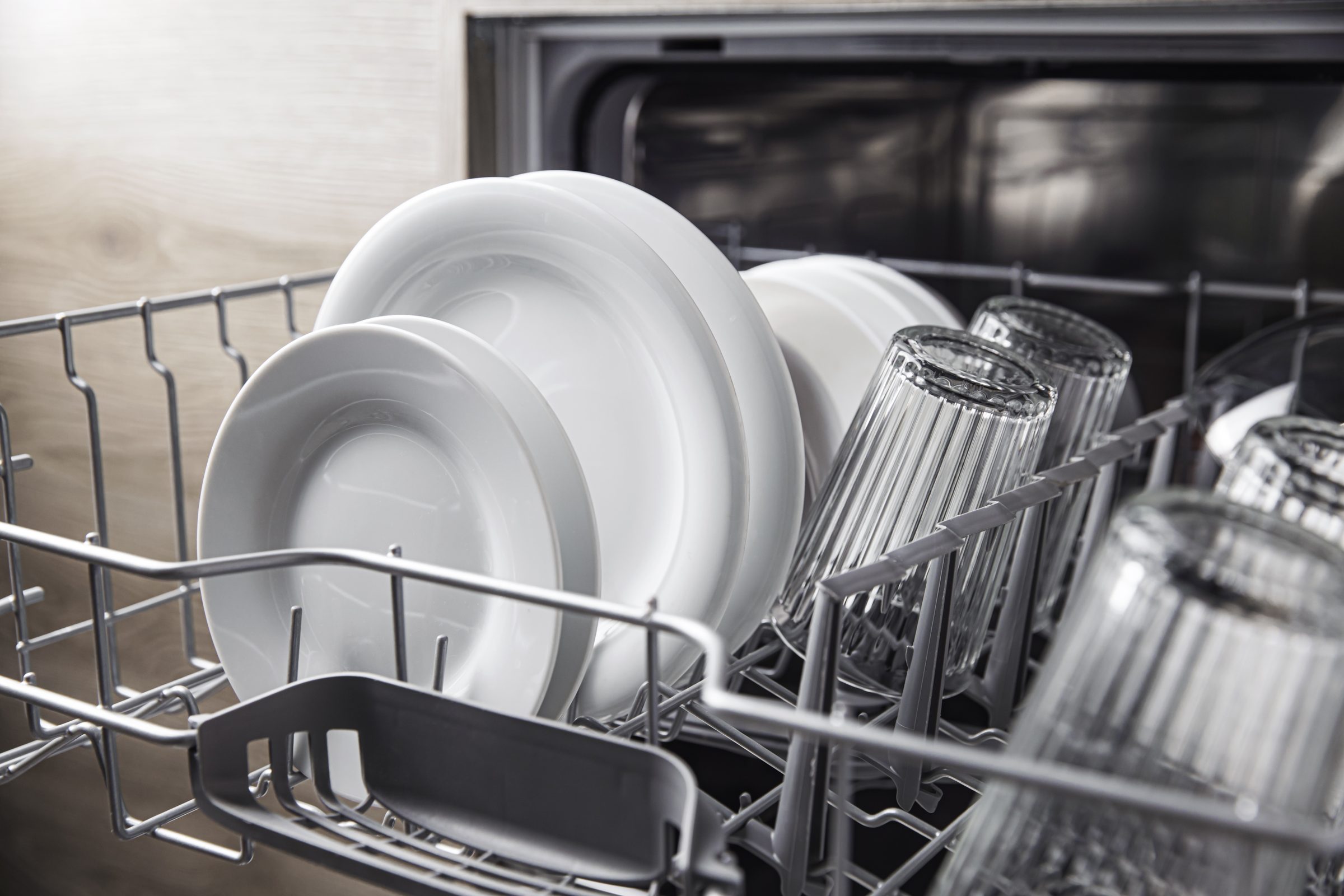
- “Plastics wet and everything else nearly dry”
- “Water pooled in the bottoms of cups”
- “A whole load damp at the end”
Symptom
JennAir dishwasher is not drying
Everything comes out clean and everything comes out wet. On these machines that is usually not the heater — it is the rinse aid, the way the load is stacked, or the cycle that was actually run.
- From $95 diagnostic, credited to the repair
- 59 cities and neighborhoods covered
- OEM parts available on order
- In writing the price, before anything is opened
Five ordinary causes
What this usually turns out to be
Cheapest and commonest first, which is also the order we check them in. They sit hundreds of dollars apart, and only the unit settles which one is yours.
-
Empty rinse aid
The first thing every time, and free. Without it water sits on surfaces in beads instead of running off.
-
The cycle that was selected
Not every cycle includes the drying option. A machine set to a short or eco program is doing what it was asked.
-
How the load is stacked
Plastics laid flat hold a puddle, and items nested together shade each other. Plastic also holds less heat than glass, which is why it is wet when everything else is dry.
-
The door opened too soon
These machines finish drying with residual heat. Opening at the beep and unloading the bottom rack first is what puts water from the top rack onto the dishes below.
-
The heater circuit or its sensor
Last on the list rather than first. A cycle that never reaches temperature washes badly as well as drying badly, which is the tell.
Dishwasher wash & filter service from $145
In five minutes
Before you call anybody
None of it needs tools, and all of it makes the visit shorter.
-
01
Fill the rinse aid and set it higher
There is a setting as well as a reservoir. In hard water it is worth turning up.
-
02
Run a normal cycle with the drying option on
Then judge. A short cycle is not the test.
-
03
Unload the bottom rack first
Sounds trivial and is not. Water pooled on upturned cups in the top rack lands on everything below when you take the top rack out first.
-
04
Give it ten minutes after the beep
Leave the door shut. The last of the drying happens without any power going anywhere.
-
05
If it also washes poorly, book it
Bad washing and bad drying together points at the heat rather than at the routine, and that is a real repair.
How it shows up
What people describe when they call

In more detail
About JennAir dishwasher is not drying
The fastest diagnosis is the code
Check the rinse aid reservoir. It is the small flap beside the detergent cup, and empty is far more common than anybody expects — these machines dry with heat and airflow rather than by baking the load, and rinse aid is what makes water sheet off instead of sitting in drops. Then look at whether the cycle you run actually includes the drying option.
These machines do not bake the load
A dishwasher that dries by making the cavity very hot dries plastics too, and it also warps them and uses a great deal of electricity. This line dries with a combination of residual heat and airflow, which is quieter, gentler and more efficient — and which depends on rinse aid and on how the load is arranged in a way that the older method did not. That is why so many "not drying" calls are settings rather than parts.
The order that actually fixes it
Rinse aid, then the cycle, then the loading, then the ten minutes after the beep. Only when all four are right and the load is still wet is the heater circuit worth measuring — and if it is the heater, the washing is usually poor as well, because the same heat does both jobs.
This article is based on:
- Official manufacturer documentation
- Internal repair procedures
- Technician repair history
- Company quality standards
Before you book
Questions about JennAir dishwasher is not drying
Only the plastics are wet.
That is normal physics rather than a problem. Plastic holds much less heat than glass or ceramic, so it does not carry enough warmth of its own to evaporate the last of the water. Rinse aid helps, stacking plastics at an angle helps more, and no repair will change it.
Do I really need rinse aid?
On a machine that dries with heat and airflow rather than by heating the load hard, yes — it is not an upsell. It changes water from beads that sit into a film that runs off, and it is the difference between a dry load and a damp one. It is also what stops the spotting people blame on the wash.
It used to dry and now it does not.
Look for what changed. A refilled or switched detergent, a rinse aid reservoir that ran out, a new cycle habit, a load that has got fuller. If nothing changed and it washes fine, the heater circuit is worth measuring — but that is the fourth thing to look at, not the first.
Where we do it
Across Miami-Dade, Broward, and Palm Beach
Same terms everywhere we go: an on-site diagnostic first, the price agreed in writing, and the exact figure confirmed once we have seen the unit.
Neighborhoods people ask for by name