- “Consistently browning too fast or too slowly”
- “Baking that has changed without anything else changing”
- “The display saying one thing and the food saying another”
Symptom
JennAir the oven temperature is wrong
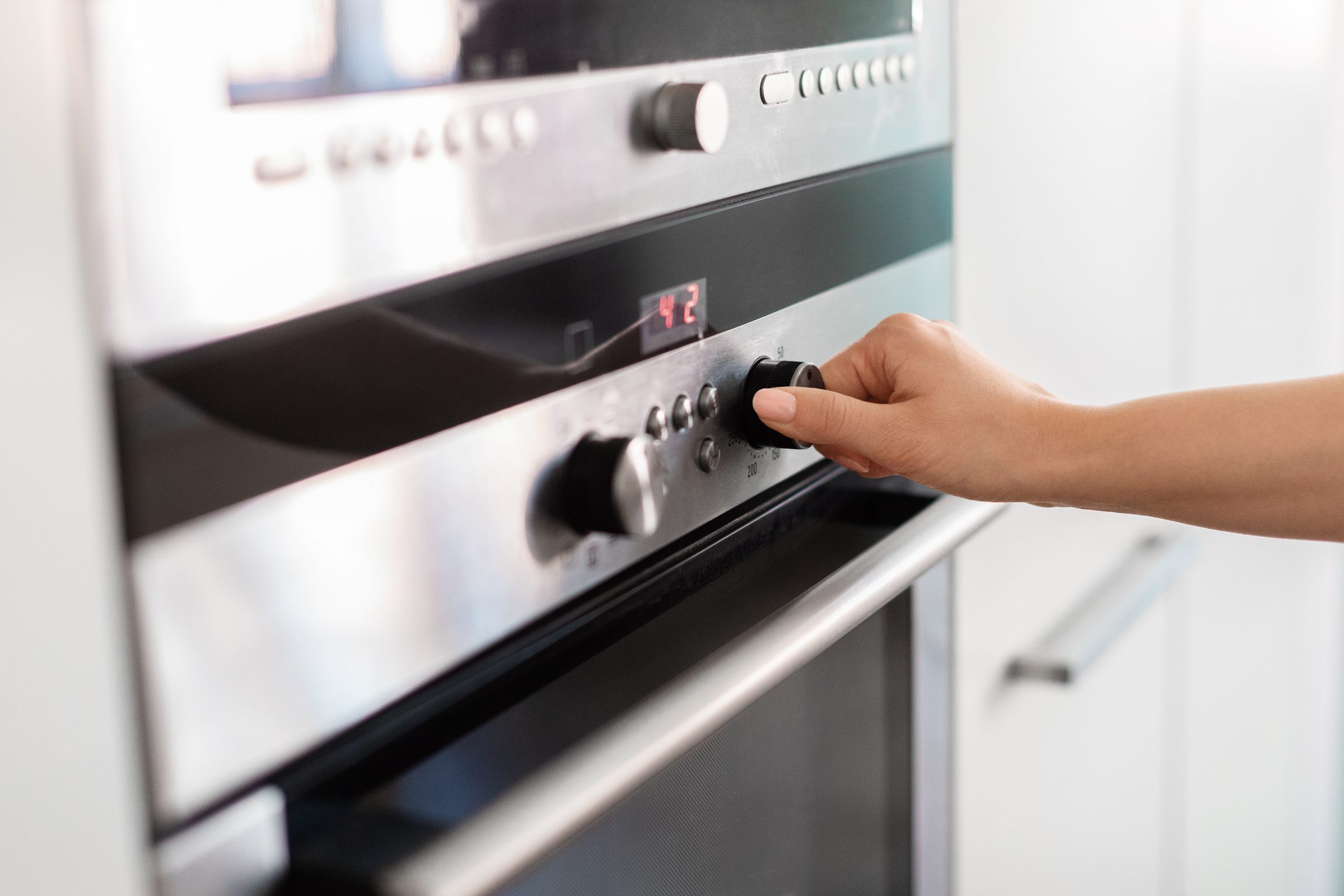
Everything browning too fast, cakes sinking, a roast taking half again as long. Before any part is considered, this needs a number — and these ovens have a calibration adjustment built in that is free to use.
- From $95 diagnostic, credited to the repair
- 59 cities and neighborhoods covered
- OEM parts available on order
- In writing the price, before anything is opened
Five ordinary causes
What this usually turns out to be
Cheapest and commonest first, which is also the order we check them in. They sit hundreds of dollars apart, and only the unit settles which one is yours.
-
Calibration
A setting rather than a part, built into the control, and the right first answer for an oven that is consistently out.
-
The oven sensor
Reporting the wrong number, so the control heats to the wrong temperature perfectly accurately. Cheap part, common answer.
Oven heat & sensor repair from $215 -
An element failing under load
Reads fine cold, cannot hold temperature hot. Shows as slow rather than as wrong.
Oven heat & sensor repair from $215 -
A door not sealing
Heat leaving as fast as it is made. Usually the hinges or the seal, and it also shows as a hot kitchen.
Oven heat & sensor repair from $215 -
The convection fan
On a convection setting only, and it produces uneven results rather than uniformly wrong ones.
Oven heat & sensor repair from $215
In five minutes
Before you call anybody
None of it needs tools, and all of it makes the visit shorter.
-
01
Get a real number
An oven thermometer, an empty cavity, twenty minutes past the preheat beep. Do not judge this by baking.
-
02
Test at two temperatures
Say 300 and 425. Out by the same amount at both is calibration. Out by different amounts is the sensor.
-
03
Try the calibration adjustment
It is in the settings menu and the manual names it. Free, reversible, and often the whole answer.
-
04
Check the door
Does it close firmly and sit square? A gap you can see light through is heat leaving.
-
05
Then book it
Bring the two thermometer readings with you. They shorten the visit considerably.
How it shows up
What people describe when they call

A shortcut
Narrow it down before anybody arrives
A description of the behaviour leaves a few possible causes. A code names the subsystem before anybody opens anything, which is why it is worth photographing before it clears.
If the display is showing something
Photograph it before it clears — codes do not wait. Search the full code list
In more detail
About JennAir the oven temperature is wrong
The fastest diagnosis is the code
Put an oven thermometer in the middle of the empty cavity, set 350, and let it run for twenty minutes after it says it has preheated. Write down what the thermometer reads. If it is out by a fixed amount, the calibration adjustment in the control will correct it and costs nothing. If it is out by different amounts at different temperatures, that is the sensor.
A number, then a decision
Nearly every complaint about an oven is about temperature, and nearly every one starts the same way: what is the cavity actually doing? A thermometer in an empty oven, at two different settings, separates a free calibration adjustment from a cheap sensor from a moderate element in about half an hour. Doing it in that order is what stops a part being ordered for a setting.
Calibration is a real feature, not a workaround
These ovens have an adjustment in the control for exactly this. It exists because installations, altitudes and habits differ, and using it is not papering over anything. An oven that is out by a fixed amount at every temperature is precisely what it is for. An oven out by different amounts at different temperatures is not, and that is the distinction the two-temperature test gives you.
This article is based on:
- Official manufacturer documentation
- Internal repair procedures
- Technician repair history
- Company quality standards
Before you book
Questions about JennAir the oven temperature is wrong
How far out is normal?
A domestic oven cycles around its set point rather than holding it exactly, so a swing of some degrees either side while it runs is expected. What is not expected is an average that is consistently off by twenty-five degrees or more, or an oven that reads correctly at one temperature and badly at another.
It only started after we moved in.
Then check the calibration before anything else — the adjustment is a setting and previous owners change it. It is also worth checking that nothing about the installation changed, particularly on a wall oven that was taken out and put back.
Convection results are uneven but bake is fine.
That points at the convection fan or its element rather than at the oven temperature at all. On a system with two fans at two heights, noting whether the top or the bottom of a full oven is underdone is genuinely useful.
Can I just cook 25 degrees higher and ignore it?
You can, and plenty of people do. What it costs you is anything with a narrow window — pastry, custard, bread — and it hides a sensor drifting further. If the calibration adjustment fixes it in two minutes, that is a better answer than remembering an offset forever.
Where we do it
Across Miami-Dade, Broward, and Palm Beach
Same terms everywhere we go: an on-site diagnostic first, the price agreed in writing, and the exact figure confirmed once we have seen the unit.
Neighborhoods people ask for by name