Safety & Risks
Your Cooktop Still Works With a Crack in It. That Is the Trap
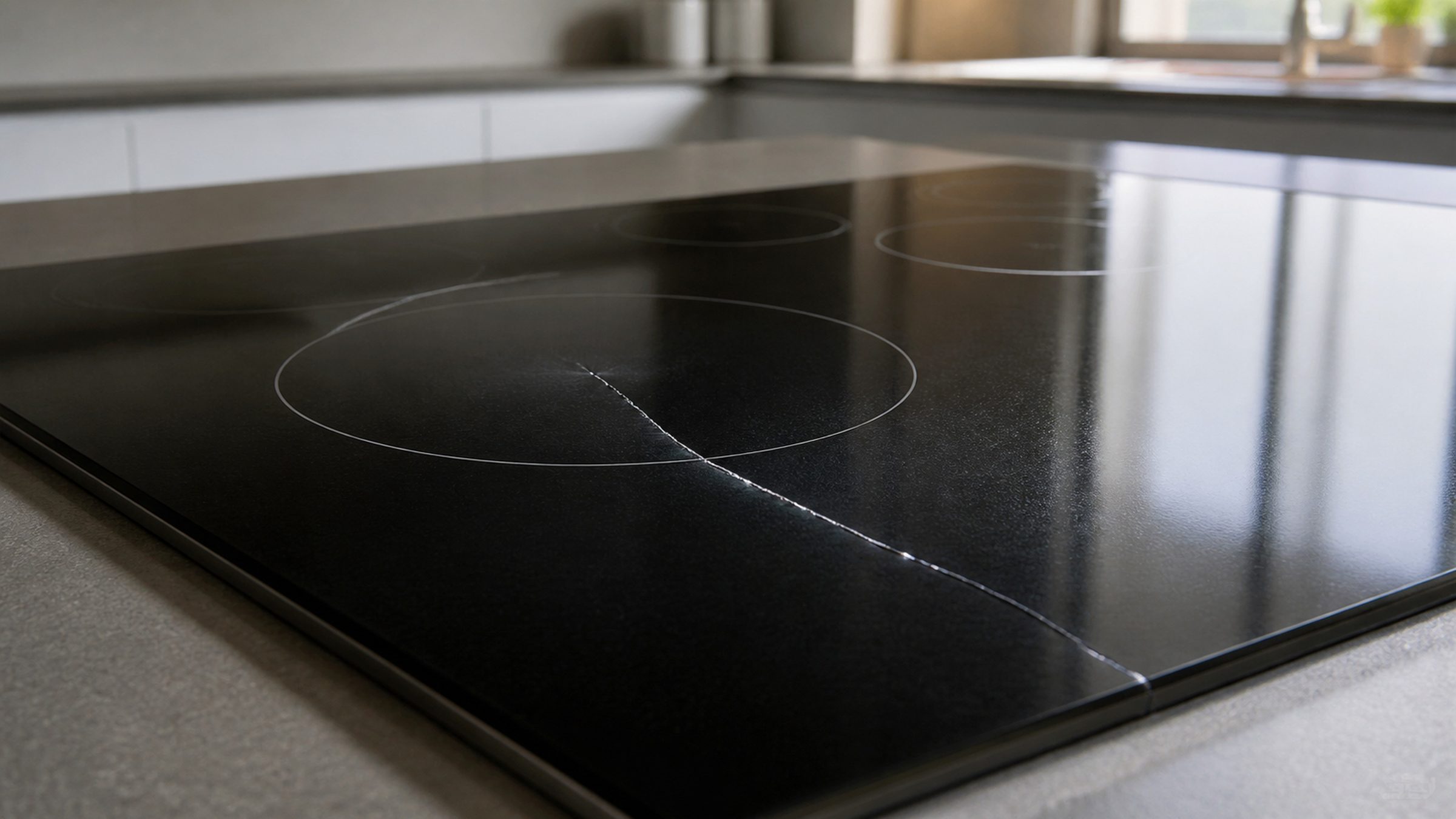
Turn it off at the breaker and stop using it. That instruction comes before everything else on this page because the appliance will usually keep working with a crack in it, and that apparent normality is what persuades people to carry on for months. The glass on a radiant or induction cooktop is not a cosmetic surface: it is a structural, sealed barrier between whatever is on top and the elements, wiring and control electronics directly beneath. A crack breaks the seal. Anything that boils over now has a path to live components under the surface, and on an induction cooktop it also has a path to a coil assembly and control board sitting immediately below. Whether it can be repaired is a separate question with an honest answer: the glass is a replaceable part on many models, and on an older cooktop it is frequently no longer available, which sometimes ends the conversation before the price does.
The full guide
Can a cracked glass stove top be repaired? Turn It Off at the Breaker
Before anything else on this page: switch the cooktop off at the breaker and stop using it.
Not at the control panel. The breaker. The controls tell the appliance to do less; the breaker removes the power.
This is the only page on this site that opens with an instruction rather than a list, and the reason is the next section.
It applies to every glass surface JennAir builds: the radiant cooktops, the smart induction ones, and the electric downdraft models where the glass runs right up to the vent slot.
Why It Still Works, and Why That Is the Problem
A cracked cooktop almost always keeps cooking. The zones heat, the controls respond, the pan boils. Nothing about the appliance's behavior suggests anything is wrong.
That is exactly why people live with one for months. It works, it is expensive to fix, and there is no daily reminder that anything is different.
In a Miami kitchen there is a second reason to stop sooner rather than later. Humid air and the salt in it reach the electronics under the glass through the crack, and a cooktop that survived the crack can be lost to what came through it.
But the glass on a radiant or induction cooktop is not a cosmetic panel over the working parts. It is the working part that keeps everything else safe. It is:
- a sealed barrier between whatever is on top and everything underneath;
- structural — it carries the weight of pans and takes the thermal cycling of daily cooking;
- the thing standing between a spill and live electrical components sitting directly beneath it.
A crack ends the first of those and compromises the second. Whatever boils over now has a path down.
On an induction cooktop that path leads to coil assemblies and a control board mounted immediately under the glass — closer, and far more expensive, than the elements under a radiant surface. A modest spill through a crack can turn a glass replacement into a glass-and-electronics replacement.
Cracks Grow
The second reason not to wait is that a hairline crack does not stay hairline.
Every time you cook, the surface heats and cools. That cycling is precisely the load that propagates a crack — slowly, invisibly between one week and the next, and then noticeably.
A crack that is currently two inches and cosmetic is on its way to being something else, and the appliance gives you no warning at the point where it stops being manageable.
Can It Be Fixed?
Two separate questions, and they get different answers.
Can the glass be repaired?
No. There is no resin, filler or bonding process that restores a cooking surface to sealed, structural and able to survive thermal cycling to several hundred degrees. Products sold for this are cosmetic, and a cosmetic fix on a safety barrier is worse than nothing because it hides the crack.
Can the glass be replaced?
Often, and this is the honest part of the page.
On many models the surface is a replaceable part, and where it is available the work is ordinary. The complication is not skill or price — it is availability.
Cooktop glass is model-specific: the cutouts, the zone markings, the frame and the fixings all belong to that model. On an older appliance the part is frequently no longer manufactured, and no amount of willingness to pay changes that.
So the sequence we follow, and would suggest to anybody:
- Get the model number off the plate — on a cooktop that means a phone held up into the cabinet below.
- Check availability of the surface for that exact model.
- Only then discuss whether it is worth doing.
Quoting a repair before knowing the part exists wastes everybody's time, and on this class of appliance it is the step most often skipped.
What Cracked It
Worth knowing, because it changes whether it happens again.
Impact. Something dropped, a heavy pan set down hard, a jar knocked over from a shelf above. The common one.
Thermal shock. A cold pan onto a hot zone, or cold liquid spilled onto a zone that has just been used. Less obvious and more common than people think.
An oversized pan. On induction especially, a pan overhanging its zone concentrates heat at the edge of the coil where the glass was not designed to take it.
Installation stress. This is the one worth flagging. A crack that starts at an edge or a corner — rather than radiating from an obvious impact point — often means the cooktop is under stress from how it sits: a worktop aperture cut slightly tight, a surface that has moved since installation, or fixings pulled up harder than they should be.
If that is your case, replacing the glass without correcting the installation gives you a second cracked cooktop. Say where the crack starts when you call; it is genuinely diagnostic.
While You Wait
The cooktop is off at the breaker. That is the whole of the safety advice, and the rest is practical:
Book it as a JennAir cooktop rather than as "a cooktop": the glass on a radiant model, on a smart induction one and on a downdraft model are three different parts, and the model number decides which is coming.
- Do not put anything on it — it is no longer a surface you should be loading.
- Do not clean liquid over the crack, which pushes fluid straight into the gap.
- Photograph it, including where the crack starts and how far it runs. It helps before anybody arrives.
- Find the model number while you are waiting, since the whole conversation depends on it.
When the Answer Is a New Appliance
Sometimes it is, and we would rather say so than sell a repair.
If the surface is no longer available, or if the cost of glass plus labor approaches what the cooktop is worth, replacement is the sensible answer. On a built-in cooktop that conversation has its own complication — the new appliance has to fit the existing aperture in the stone, and if it does not, the worktop needs cutting.
That is worth knowing before shopping rather than after. It is the same arithmetic as everywhere else on this equipment: the appliance is a purchase, and the opening it lives in belongs to the kitchen.
If it turns out to be a repair
What this leads to, and what it costs
Every job on this site is priced the same way: an on-site diagnostic first, the figure agreed in writing before anybody starts.
-
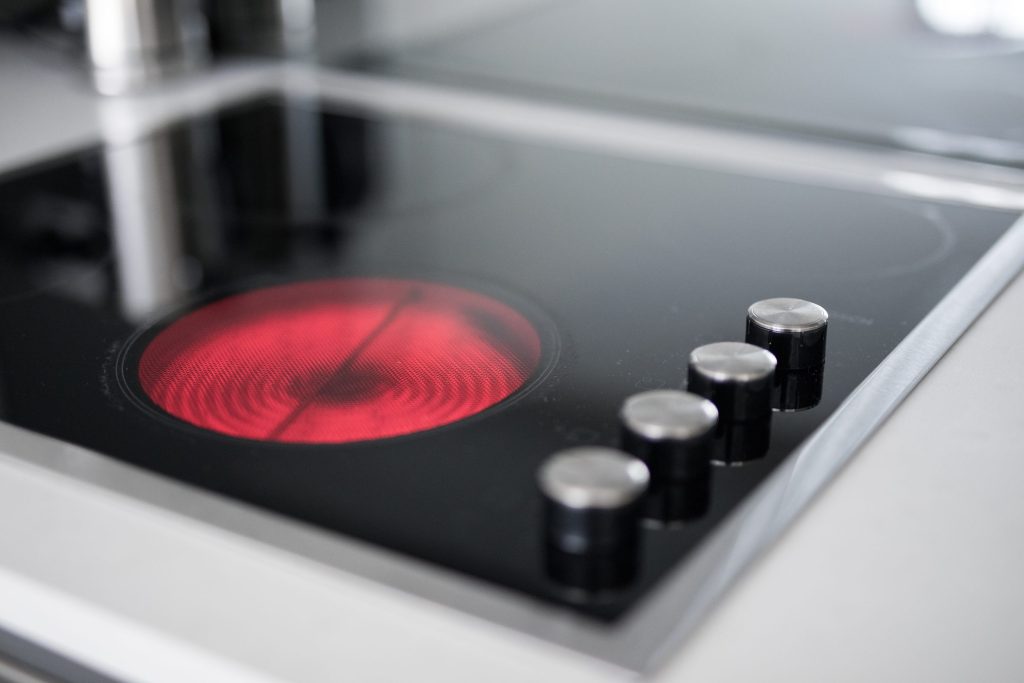
from $195 Cooktop surface & element repair
A radiant zone stuck on full or dead altogether, a switch that has stopped metering, or glass that has cracked. Two very different jobs in one band, which is exactly why it is a band.
- Element and switch told apart, because they share a symptom
- Glass availability confirmed before anything is booked
- A cracked surface goes off at the breaker and stays off
-
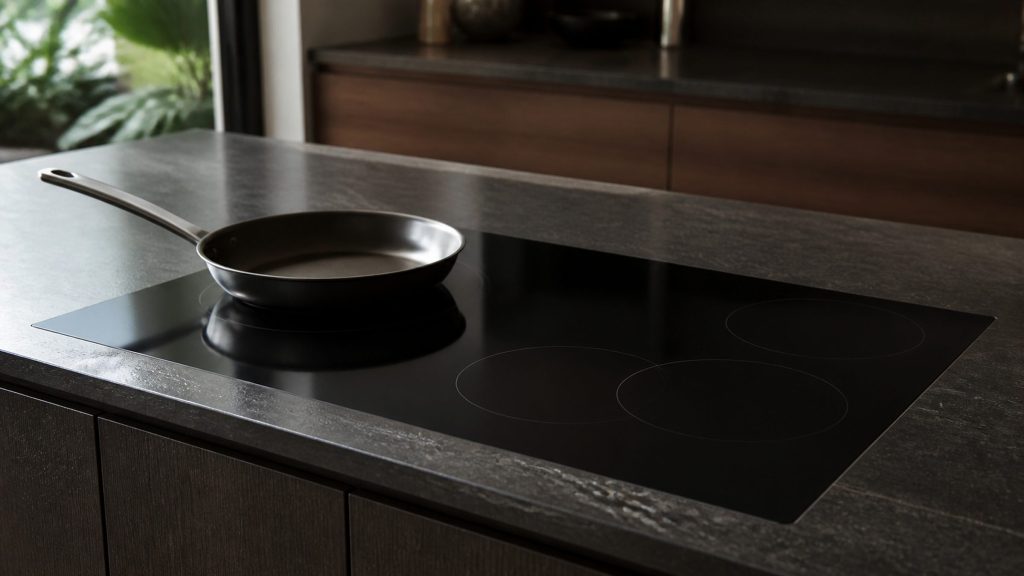
Induction · Radiant · Gas · Downdraft · Rangetops · Euro-Style · 30" · 36" · 45" · 48" Cooktops and rangetops
The widest row on this site: thirty-nine cooktops and fourteen professional rangetops, which are the same repair under a different word. Induction, radiant glass, sealed gas, and the downdraft cooktops that pull the steam down through the counter instead of up into a hood — an idea this maker invented and still sells.
- One induction zone cutting out while the rest keep going
- A gas burner clicking without lighting, or lighting and dropping out
- A downdraft that runs but no longer pulls

Questions people ask about this
It is a hairline crack and everything works. Is this really necessary?
Yes, and the reason is what the glass does rather than how big the crack is. That surface is a sealed barrier over elements, wiring and — on induction — a coil assembly and control board immediately beneath. Once it is cracked, the seal is gone, and a boil-over has a route to live components. Hairline cracks also propagate: thermal cycling every time you cook is precisely the load that lengthens them.
Can the glass be replaced, or is it a new cooktop?
On many models the surface is a replaceable part, and where it is available the job is straightforward. The honest complication is availability: on an older cooktop the glass is frequently no longer made, and no amount of willingness to pay changes that. We check availability before quoting rather than after, because a quote for a part that cannot be bought wastes everybody's time.
Can a crack be repaired rather than replaced?
No. There is no filler, resin or bonding process that restores a cooking surface to what it needs to be — sealed, structural and able to take thermal cycling to several hundred degrees. Anything sold for this purpose is cosmetic at best. The surface is replaced or the appliance is.
What cracks a cooktop in the first place?
Impact is the obvious one — something dropped, a pan set down hard, a jar knocked over. Thermal shock is the less obvious one: a cold pan onto a hot zone, or a spill of cold liquid onto a zone that has just been used. And occasionally it is a pan that was too heavy for the way it was put down rather than for the surface itself. On an induction cooktop, an oversized pan overhanging its zone concentrates heat where the glass was not expecting it.
The crack is at the edge, near the frame.
Worth mentioning when you call, because it changes the likely cause. A crack starting at an edge or a corner frequently means the cooktop is under stress from its installation — a worktop cut a fraction tight, a surface that has moved, or fixings pulled up too hard. Replacing the glass without correcting that produces a second cracked cooktop.
It is an induction model. Does that change anything?
It raises the stakes. Under an induction surface sit the coil assemblies and a control board, all of them closer to the glass than the elements in a radiant cooktop and considerably more expensive. A spill through a crack on an induction cooktop can turn a glass job into a glass-and-electronics job, which is a very different figure.
Safety & Risks
More guides like this one
-
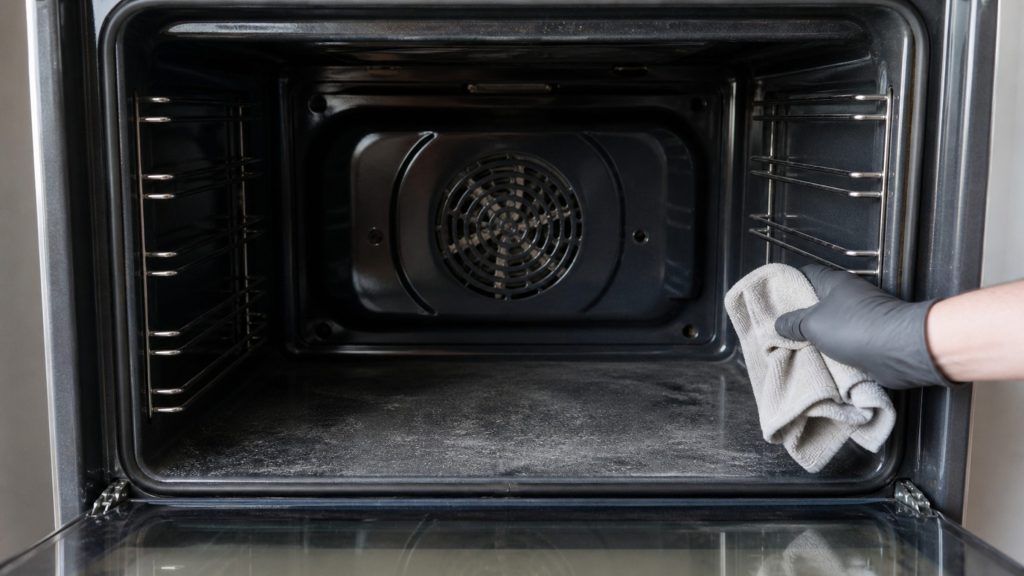
Self-Clean Is the Hardest Thing Your Oven Ever Does to Itself
Repairs cluster around this cycle, and the two usual pieces of advice are "never use it" and nothing at all. Neither is right. Here is what the cycle actually does to the appliance, and why it tends to find problems rather than create them.
Read more -

Water Under a Built-In Appliance Reaches Your Cabinets Before It Reaches You
Water inside a cabinet can wait a week. Water underneath one cannot, and in a built-in kitchen you will see the cabinet base go before you see a puddle on the tile.
Read more -
The One Kitchen Appliance You Should Not Open, Even With the Power Off
A microwave that runs, lights up and turns the plate but leaves the food cold is a common failure with a short diagnosis. It is also the one appliance in the kitchen where the advice is to stop rather than to look further, and there is a physical reason for that.
Read more
Tell us the model number and what it is doing.
This article is based on:
- Official manufacturer documentation
- Internal repair procedures
- Technician repair history
- Company quality standards