Safety & Risks
Self-Clean Is the Hardest Thing Your Oven Ever Does to Itself
A pyrolytic self-clean holds the cavity at roughly 800-900°F for two to four hours — far above anything cooking asks of it — and reduces soil to ash. Everything in the appliance is worked harder during that cycle than at any other time: the element runs at full duty for hours, the cooling fan runs continuously, the door latch motor operates under heat, and the temperature sensor sits at the top of its range the whole time. That is why so many failures appear "after a self-clean". In most cases the cycle did not break anything — it tested a part that was already marginal, and the part failed under the only load heavy enough to expose it. The locked door is not a timer: it is an interlock that stays engaged until the cavity has cooled to a safe temperature, which can be an hour or more after the cycle finishes. Forcing it is how a latch repair becomes a door repair.
The full guide
Jenn Air oven self cleaning not working starts with what the cycle actually is
A self-clean cycle is not a hot wash. There is no water, no chemical and no detergent involved. The oven simply heats its own cavity until everything organic inside it turns to ash.
The temperature required for that is roughly 800 to 900°F, held for two to four hours depending on the setting. For comparison, a hot roast is 425°F and a broil element working flat out is not asking the cavity to sit anywhere near this for anywhere near this long.
On a JennAir wall oven that matters twice over, because most of them are stacked into a column with a microwave or a second cavity above or below, and everything in the housing gets the heat that the door and the vent shed.
Everything in the appliance is worked harder during those hours than at any other point in its life:
- the bake element runs at close to full duty, continuously, for the length of the cycle;
- the temperature sensor sits at the very top of its measuring range for the whole time, and is expected to stay accurate there;
- the cooling fan runs without pause to keep the cabinetry around the oven within its limits;
- the door latch motor operates, and then holds, at temperature;
- the control board manages all of that from a position inside a hot cabinet.
That list is the whole explanation for why repairs cluster around this cycle.
The Cycle Finds Problems. It Rarely Makes Them.
This is the part worth understanding, because it changes what you do about it.
A temperature sensor that has drifted slightly will still cook acceptably at 350°F. Put it at 875°F for three hours and the drift becomes an error the control cannot work with. An element with a developing weak spot bakes bread perfectly well and fails at full duty in hour two. A latch that has been getting stiff manages fine when it is cold and stops halfway when it is hot.
None of those parts were healthy the day before. They were marginal, and normal cooking is not a hard enough test to reveal it.
So when somebody tells us the oven stopped working after a self-clean, the honest answer is usually: the cycle did not do this, but it is why you found out today rather than in six months. And there is a small silver lining in that — you found out while the appliance was empty, rather than with dinner in it.
The Locked Door Is an Interlock, Not a Timer
Every self-clean oven locks its door for the cycle, and the lock is a motorized latch — a hook that swings into a striker and holds the door shut.
What matters is what releases it. It is not a countdown. The control keeps that latch engaged until the cavity has cooled to a temperature it considers safe, and a well-insulated built-in oven takes a long time to get there. An hour after the cycle ends is normal. Longer is not unusual.
Then the two ways this goes wrong:
The oven is cold and the door is still locked. The latch motor or the switch that tells the control where the latch is has stopped partway. This is a real repair and a modest one.
Somebody pulls on it. This is the expensive version. The hook and the striker are steel, and the thing that gives is whichever is weakest — often the door itself, which on a built-in oven of this class is a heavy multi-pane assembly with hinges rated to hold it. A latch job becomes a door job, and the door is one of the most expensive parts on the appliance.
If your door is locked and the oven is cold, leave it alone and call somebody. It will not get worse by waiting.
Running One Sensibly
None of this is an argument against using the cycle. It is an argument for using it deliberately.
Take the racks out unless your manual specifically says they are self-clean safe. Many are not, and the ones that are not come out discolored and rough, after which they no longer slide properly.
Wipe out loose debris first. The cycle is designed to deal with baked-on soil, not with a spill from last night. Less material means less smoke.
Ventilate. Run the hood, open a window. There will be some smell no matter how clean the oven was.
Get birds out of the room. That instruction is in every manual for this cycle and it is not decorative — fumes from any residue at that temperature are genuinely dangerous to them.
Do not run it the day before you need the oven. This is the single most useful piece of advice on this page. If the cycle is going to find a marginal part, it will find it on the day it runs. Choose a day when an oven out of action for a week is an inconvenience rather than a disaster.
Run it while you are in the house. Not because it is dangerous, but because you want to know if something smells wrong.
After the Cycle
Once the oven is cold and unlocked:
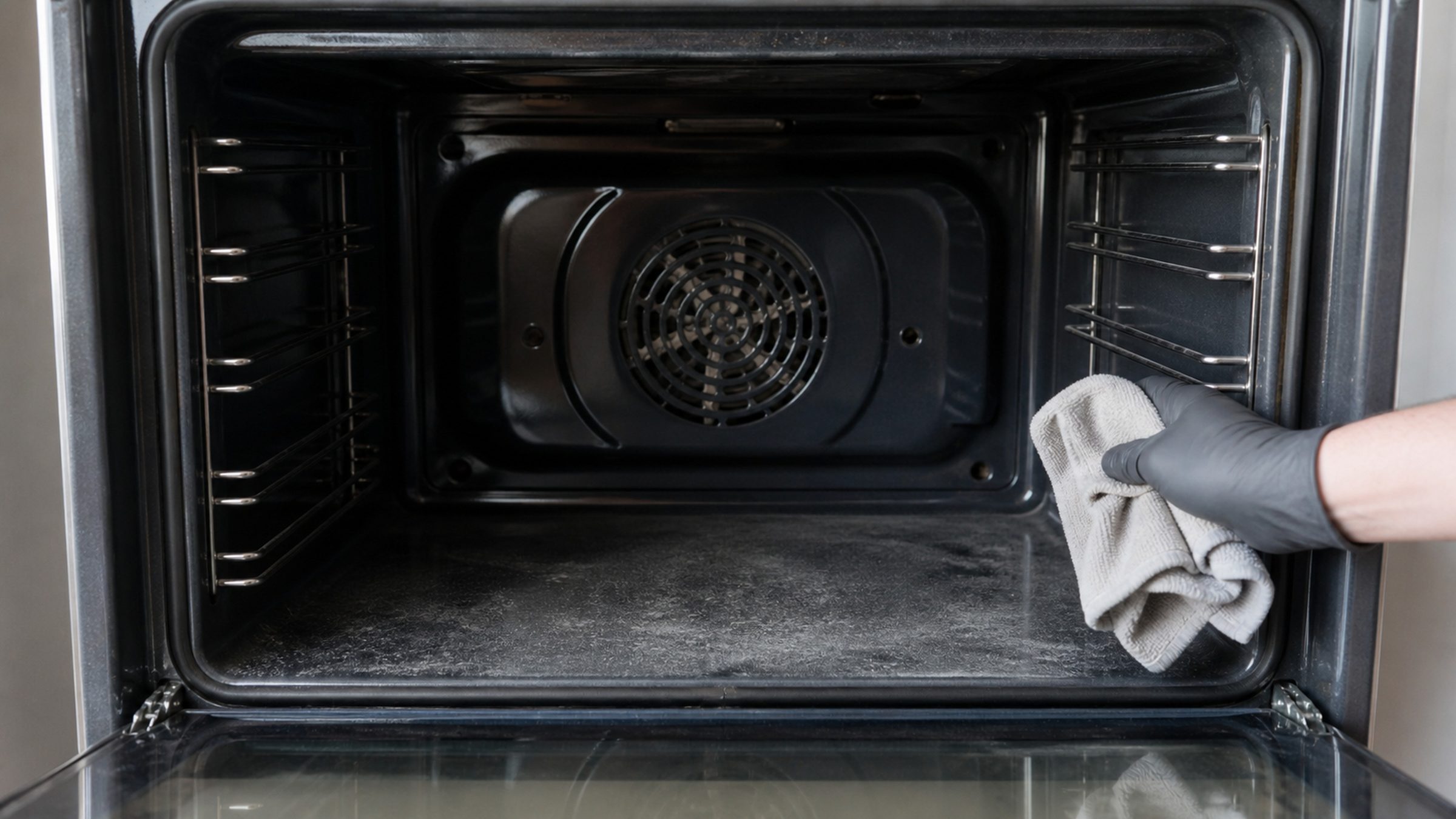
Wipe out the ash with a damp cloth. That is the whole of the aftercare.
Check the door seal. The gasket is not usually meant to be cleaned aggressively, and a gasket that has hardened or torn will cost the oven heat every day from now on.
Run something ordinary before you trust it. Heat it to 350°F and check it holds. A sensor that came out of the cycle drifting will tell you here, on an empty oven, rather than during a roast.
If anything is different — slower to heat, a temperature that seems wrong, a new noise from the fan — say so when you call, and say it followed a self-clean. It narrows the diagnosis immediately, because we already know which parts were worked hardest.
And if the oven is a JennAir wall oven stacked in a column, give the whole housing an hour before you judge any of it: the cavity above or below has been sitting in that heat too, and it cools on its own schedule.
If it turns out to be a repair
What this leads to, and what it costs
Every job on this site is priced the same way: an on-site diagnostic first, the figure agreed in writing before anybody starts.
-
from $215 Oven heat & sensor repair
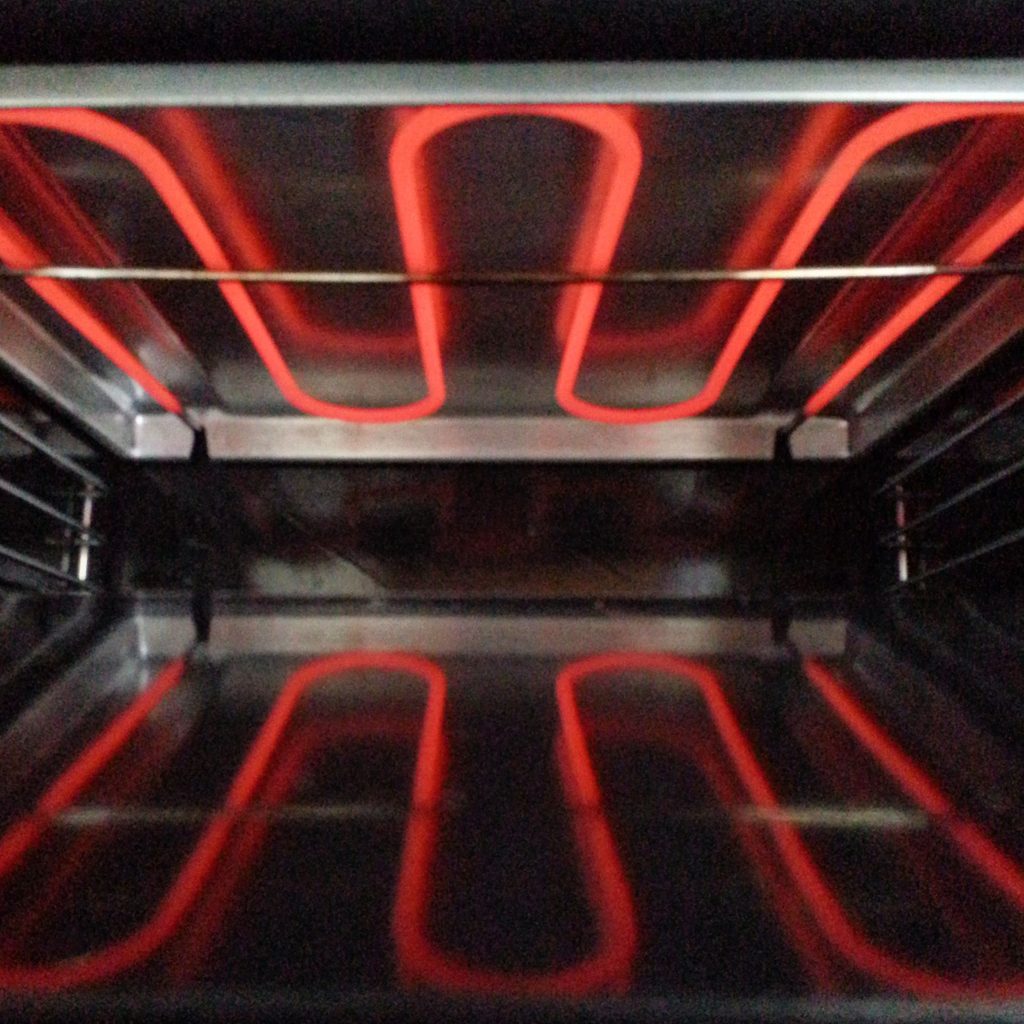
An oven running hot, running cold, taking far too long, or not heating at all — and the door that will not unlock after a self-clean. On a built-in oven the repair is often short and the access is the appointment.
- Calibration tried before any part is ordered
- Sensor, elements and convection measured under load
- The oven out of its housing and back in leveled
-
Single · Double · Microwave combination · Speed oven · V2 convection · 27" · 30" Wall ovens
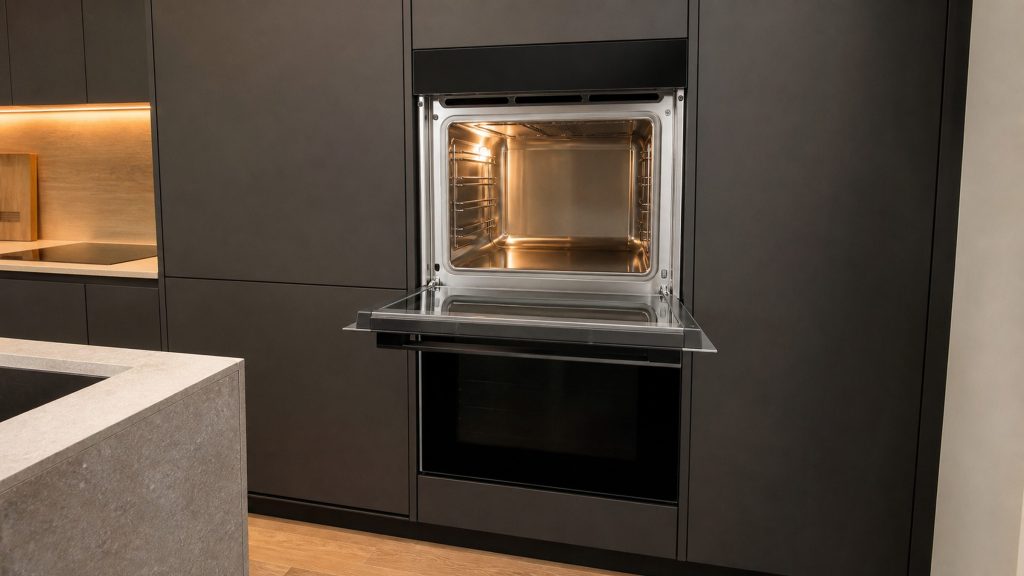
Twenty machines: single ovens, double ovens, the microwave-combination towers that are two appliances in one cabinet, and the speed ovens. Almost all of them are built into a run of cabinetry, which decides more about the appointment than the repair itself does — a wall oven has to come out of its housing before anybody can reach the back of it.
- Heating to the wrong temperature, or taking far too long to get there
- The convection fan running loud, or not running
- A control panel that lights and will not respond
Questions people ask about this
Should I just never use self-clean?
That is the advice the internet gives and we do not agree with it. The cycle is a designed function of the appliance and it does the job nothing else does. What is true is that it is the heaviest thing the machine ever does, so it is worth running deliberately: not the night before a holiday, not with a full kitchen, and not on an oven that has already been showing you something. Run it when a failure would be inconvenient rather than catastrophic.
The oven stopped working after a self-clean. Did the cycle break it?
Usually it exposed something rather than caused it. The parts that fail in this window — the temperature sensor, the bake or broil element, the door latch, sometimes the control board — are the parts the cycle loads hardest. A sensor that had drifted for a year fails at the top of its range; an element with a weakness fails at full duty. It is genuinely bad luck in the timing and genuinely not bad luck in the cause.
The door is still locked and the cycle finished hours ago.
Give it time first: the interlock releases on temperature, not on the clock, and a well-insulated cavity can take well over an hour to come down. If the oven is properly cold and the door is still locked, the latch motor or its switch has stopped partway. That is a service call, and it is a small one — provided nobody has tried to force it.
Can I force the door open?
Please do not. The latch is a motorized hook engaging a striker, and pulling against it bends the hook, the striker or the door itself. A latch motor is an ordinary part and a straightforward job. A bent door on a built-in oven is a different conversation entirely, and on this equipment the door assembly is one of the more expensive parts on the machine.
Is the smell normal?
Some smell is unavoidable — it is soil being reduced to ash. Heavy smoke is not, and it means there was more in the cavity than the cycle should have been asked to deal with. Wipe out loose debris and spills before starting, take the racks out unless the manual explicitly says they can stay, open a window and run the kitchen ventilation. Birds should be out of the room; that warning is in the manual for a real reason.
How often should it be run?
As often as the oven genuinely needs it and no more. Twice a year suits most kitchens. An oven used hard may want more; an oven that gets wiped down regularly may need it once. Running it monthly out of habit is asking the appliance to do its hardest work twelve times a year for no benefit.
Safety & Risks
More guides like this one
-

Water Under a Built-In Appliance Reaches Your Cabinets Before It Reaches You
Water inside a cabinet can wait a week. Water underneath one cannot, and in a built-in kitchen you will see the cabinet base go before you see a puddle on the tile.
Read more -
The One Kitchen Appliance You Should Not Open, Even With the Power Off
A microwave that runs, lights up and turns the plate but leaves the food cold is a common failure with a short diagnosis. It is also the one appliance in the kitchen where the advice is to stop rather than to look further, and there is a physical reason for that.
Read more -
Four Hours, Forty-Eight Hours: What Actually Survives an Outage
Asked more often on this site than almost anything that involves a broken machine, and in this city it comes up several times a season. The numbers are short, the instruction is shorter, and almost nobody follows it.
Read more
Tell us the model number and what it is doing.
This article is based on:
- Official manufacturer documentation
- Internal repair procedures
- Technician repair history
- Company quality standards