Troubleshooting
Your JennAir Downdraft Runs and the Kitchen Still Fills With Steam
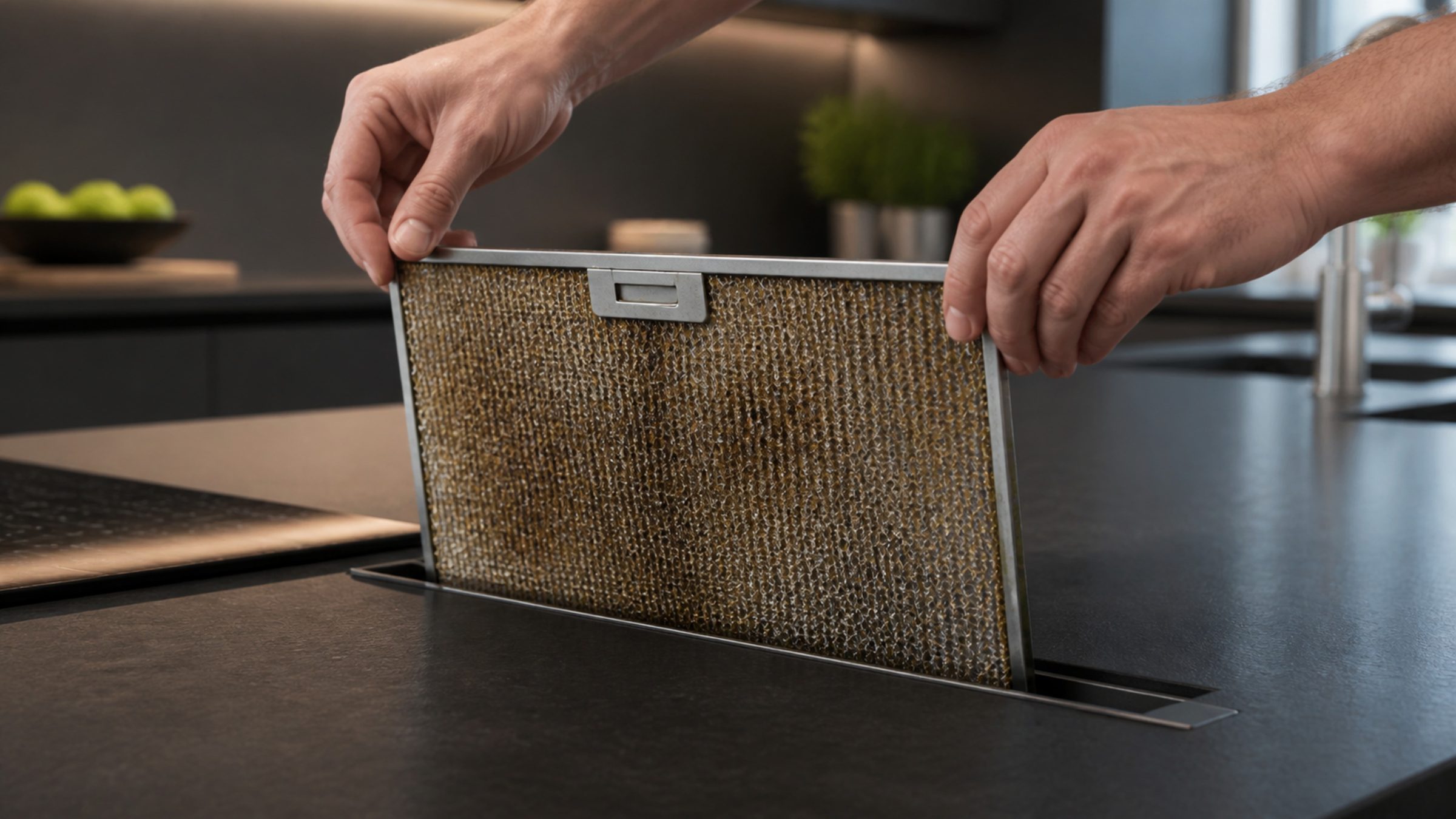
A downdraft that runs and does not pull is almost never the motor. Check, in this order: the grease filter, which wants washing monthly in a kitchen that cooks and is saturated far more often than anyone expects; the damper, which has to swing open when the blower starts and can stick after a few humid years; the duct run itself, which travels under a floor or through the back of a cabinet and can be crushed, disconnected or blocked; and only then the blower, which on many installations is not in the appliance at all but remote at the far end of that duct. The one test worth doing first takes a second: hold a sheet of paper flat against the intake with the blower running. If it holds, air is moving and the problem is downstream. If it drops, nothing is moving through and the filter is the first suspect.
The full guide
Jenn Air downdraft not working: the test that takes one second
Turn the blower to high and hold a sheet of ordinary paper flat against the intake slot.
If the paper sticks there, air is moving through the appliance and whatever is wrong is further along — the damper, the duct, or a blower sitting at the far end of it. If the paper drops, nothing is getting through at all, and the filter in front of you is the first place to look.
JennAir invented this machine — the first self-ventilating cooktop in 1961, the first downdraft range in 1965 — and it is still the only make on this fleet with a whole family of them, which is why this page exists here and nowhere else.
That single test splits this problem in half before anyone has touched a screwdriver, and it is the reason a service call for a downdraft so often ends at a sink rather than with a parts order.
Why So Little of This Is the Appliance
A hood has an easy job. Heat rises, and a canopy sits in the way of it.
A downdraft is doing the opposite. It has to catch air that wants to go up, drag it sideways and down through a narrow slot, push it through a grease filter, past a damper, and then along a duct that runs under your floor or out through the back of a cabinet before it reaches the outside world. There are five places that chain can break, and only two of them are inside the machine:
- The grease filter. Saturated, and moving air without removing anything.
- The damper. A flap that has to open when the blower starts, and sometimes does not.
- The duct. Crushed behind a cabinet, disconnected at a joint, or terminating somewhere nobody has looked since the kitchen was built.
- The blower. Which may not be where you think — more on that below.
- The control. Last, and least often.
Three of those five cost nothing to check. That is not a marketing sentence; it is why this page exists in the order it does.
The Filter Nobody Has Ever Taken Out
Downdraft grease filters are the most neglected component in a South Florida kitchen, and nobody can be blamed for it. Nothing tells you they are there. They sit flush in the counter, they lift out by hand in a second, and there is no light, no beep and no message to say they are full.
In a kitchen that cooks properly they want washing monthly. Hot water and detergent, or a dishwasher cycle, and then they have to be completely dry before they go back — a damp filter picks up more grease faster.
Wash yours and run the paper test again before you do anything else. A remarkable number of downdrafts are working perfectly behind a filter that has been full for two years.
The Damper, Which You Can Usually Hear
Between the filter and the duct there is a flap. When the blower starts, it has to swing open; when the blower stops, it falls closed so the outside does not come back in. On most installations you can hear that happen — a soft clunk a second after the fan spins up.
After a few humid summers they stick. Grease and condensation together are very good at gluing a hinge, and a stuck damper produces exactly the complaint on this page with a completely healthy motor behind it.
If you can hear your fan but never hear the damper, mention that when you call. It is a short repair.
Where Is Your Blower?
This is a real question and most people cannot answer it, which is not a criticism — there is no way to tell from the kitchen.
A downdraft blower may be:
- inside the unit itself, directly under the intake;
- in the cabinet below it, sitting on the base;
- remote — at the far end of the duct run, in a crawl space, in a soffit, or bolted to an exterior wall.
A remote blower that has failed gives you a downdraft that hums quietly and does absolutely nothing, because the hum is the control and the moving part is thirty feet away. Finding it is genuinely part of the visit, and it is the thing that moves the figure more than any component does.
The Retractable Ones Give You Warning
If your downdraft rises out of the counter when you switch it on, there is a whole mechanism in there that a flush unit does not have: a motor, a drive, and switches that tell the appliance where the panel is.
Because it is mechanical, it usually announces itself. It gets slower. It gets noisier. It stops a little short of full height and needs a nudge. Weeks of that come before it stops altogether — and that window is the cheapest moment to deal with it, because getting to the mechanism inside a countertop is the expensive part of the job whether it is seized or merely tired.
Almost nothing else in a kitchen warns you like that. It is worth using.
The Older Ones Are Usually Worth Keeping
This maker built the first self-ventilating cooktop in 1961 and the first downdraft range in 1965, and there are a lot of the intervening decades still installed in Miami. The cartridge cooktops especially — where a grill or griddle module lifts out and a two-burner cartridge drops into the same well.
The honest position on parts: the electrical and mechanical side is commonly still available — blowers, motors, switches, dampers. What is scarce is cosmetic and model-specific: certain cartridges, certain trim pieces, certain control panels. We confirm availability before ordering rather than after, and when a machine is not worth the part we say so on the visit instead of quoting you for it.
What to Have Ready When You Call
The model number, which on a cooktop is underneath and usually needs a phone camera held up into the cabinet. Whether the blower makes any sound at all. Whether you have washed the filter. And, if you happen to know, where the blower lives.
Four sentences, and they decide what travels in the van.
We repair this equipment across Miami-Dade, Broward and Palm Beach.
If it turns out to be a repair
What this leads to, and what it costs
Every job on this site is priced the same way: an on-site diagnostic first, the figure agreed in writing before anybody starts.
-
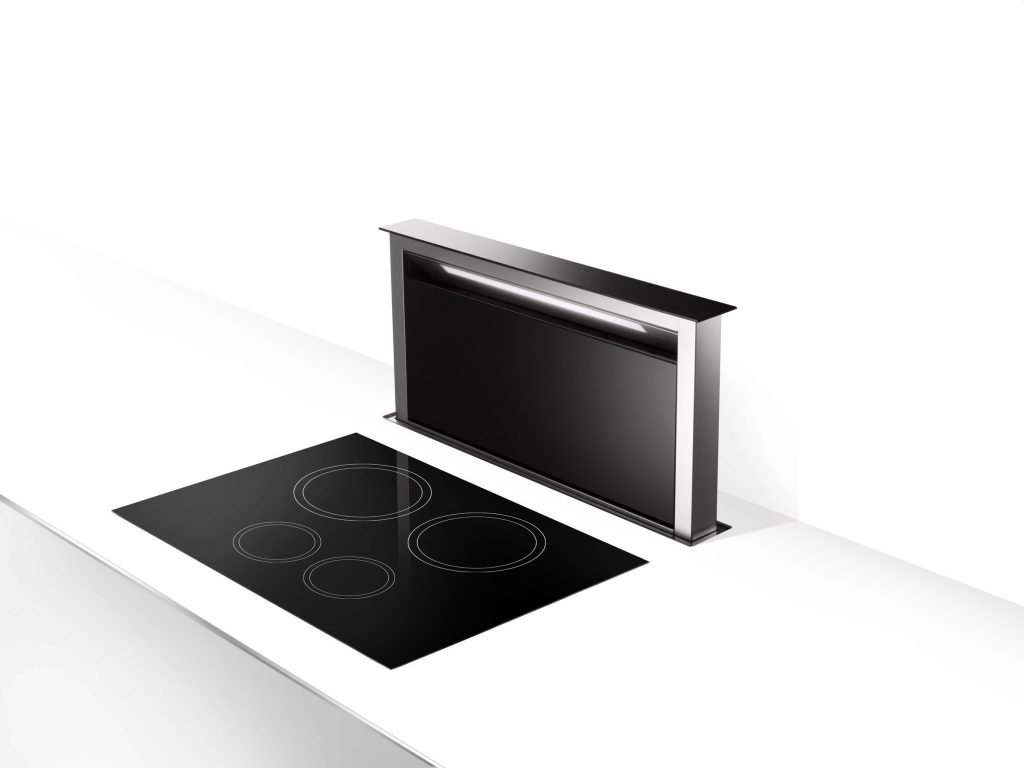
from $165 Downdraft vent & lift repair
A downdraft that runs and no longer pulls, or one that will not rise out of the counter. This maker invented downdraft ventilation and still sells it — and most of what stops one is not the appliance.
- Filter, damper and duct checked before the blower
- Remote blowers located, because they are not in the kitchen
- The lift mechanism treated as mechanical, which is what it is
-
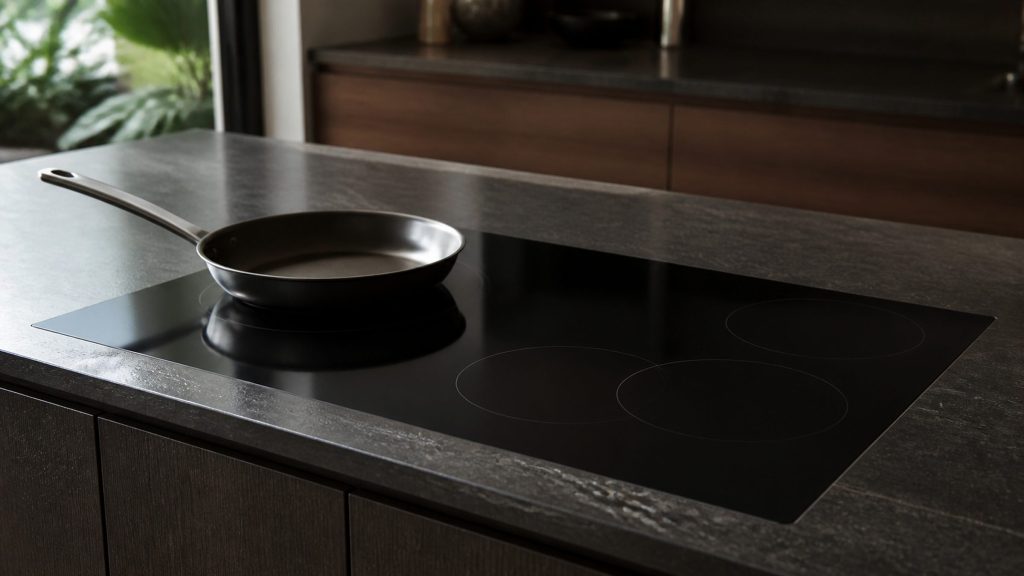
Induction · Radiant · Gas · Downdraft · Rangetops · Euro-Style · 30" · 36" · 45" · 48" Cooktops and rangetops
The widest row on this site: thirty-nine cooktops and fourteen professional rangetops, which are the same repair under a different word. Induction, radiant glass, sealed gas, and the downdraft cooktops that pull the steam down through the counter instead of up into a hood — an idea this maker invented and still sells.
- One induction zone cutting out while the rest keep going
- A gas burner clicking without lighting, or lighting and dropping out
- A downdraft that runs but no longer pulls

Questions people ask about this
How does a JennAir downdraft actually work?
It pulls air sideways and down through a slot beside or behind the cooking surface, instead of letting it rise into a hood. That air passes a grease filter, through a damper, and then along a duct that runs under the floor or through the back of the cabinetry to the outside. The whole idea is that an island cooktop does not need a canopy hanging over it — which is what made open-plan kitchens with cooking islands possible in the first place.
The fan runs but nothing gets pulled in. What is that?
The blower is turning and the air is not going anywhere, so the obstruction is between the intake and the outside. In order of likelihood: a saturated grease filter, a damper that has not opened, and then the duct itself. All three are outside the electrical side of the appliance, which is why this complaint so often ends without a part.
My downdraft will not rise out of the counter.
That is the lift rather than the ventilation: a motor, a drive and position switches living inside the countertop. It is mechanical before it is electronic, which means it usually warns you — slower, noisier, or stopping short of full height — for weeks before it stops altogether. That is a good moment to call, because reaching the mechanism is the expensive half of the job and waiting does not make it cheaper.
How often should the grease filter be washed?
Monthly is not excessive for a kitchen in daily use, and it is the single most effective thing an owner can do for a downdraft. It lifts out by hand, goes through a dishwasher or a sink of hot water with detergent, and must be completely dry before it goes back. A filter that has never been washed is behind a large share of the calls we take about this.
Mine is from the nineties. Is it still worth repairing?
Usually, and it is worth asking rather than assuming. There are a great many of these still working in South Florida, and the electrical and mechanical parts for them are commonly available. What is genuinely scarce is cosmetic and model-specific — some cartridges, some trim, some control panels. We check availability before anything is ordered rather than after, and we say plainly when a machine is not worth the part.
Troubleshooting
More guides like this one
-

F2E1 Is Two Numbers. Reading It as One Loses the Diagnosis
Four characters on a small display, and almost everybody reads them as a single token. They are two halves with two different jobs, and treating them as one is how people end up looking up somebody else's problem.
Read more -
Storm Week: Most of These Appliances Are Not Broken
In the week after a storm a large share of the calls we take are appliances reporting an outage rather than failing. Three free steps clear most of it, and the least dramatic one is the one that fixes the most.
Read more -

Fill, Freeze, Harvest: Which Half of Your Ice Maker Has Stopped
An ice maker does three things and every one of them ends with no ice. One look tells you which — and half the answers are plumbing rather than the appliance.
Read more
Tell us the model number and what it is doing.
This article is based on:
- Official manufacturer documentation
- Internal repair procedures
- Technician repair history
- Company quality standards