Troubleshooting
F2E1 Is Two Numbers. Reading It as One Loses the Diagnosis
The code has two halves and they answer different questions. The F names the function that reported — which part of the machine noticed something: the control, the door latch, a temperature sensor, the motor. The E names what that function reported: the specific condition it is describing. So F2E1 and F2E0 are neighbors, two conditions on the same part, while F1E1 has nothing to do with either despite looking almost identical on a small display. Read the four characters as one token and the resemblance between F2E1 and F1E1 leads you straight to the wrong page. The second thing worth knowing, and this archive says it on every page: the numbering is not this badge's property. JennAir, KitchenAid, Whirlpool, Maytag and Amana are one corporation running one control platform, and the same code sits at the same address under more than one of those names. That is why the appliance and the model number are half of every answer.
The full guide
Jenn Air refrigerator error codes have two halves, and they do two jobs
A code on this platform looks like F2E1 — four characters, no spaces, on a display designed for the time of day.
Almost everybody reads it as a single word. It is two.
And it is not JennAir's own alphabet. The same table is published under KitchenAid, Whirlpool, Maytag and Amana, because all five are one corporation running one control platform — so a result you find under a sibling badge is usually the maker's own text rather than somebody's guess.
The F says which function noticed. Which part of the machine raised its hand: the control itself, the door latch, a temperature sensor, a motor, a communication link between two boards.
The E says what that function reported. The specific condition. Not the same thing at all.
Once you see the split, the table stops looking like a list of unrelated four-character strings and starts looking like what it is: a set of parts, each with a handful of things it can report.
What Follows From That
Codes sharing an F are neighbors. F2E0 and F2E1 are two conditions on the same function. If you have found information about one, the other is genuinely relevant — same part, different symptom.
Codes sharing an E are not related at all. The E is numbered within its F. The E1 in F2E1 and the E1 in F1E1 have nothing to do with each other.
The two most confusable codes are the least related. F2E1 and F1E1 differ by one character in a small readout, frequently in a dark kitchen, often being read by somebody who is annoyed. They point at completely different parts of the machine. This is the practical reason to write all four characters down before doing anything else.
The Part Everybody Should Know
Here is a thing we would rather say plainly than have you discover on your own.
This numbering is not exclusive to the badge on your appliance.
JennAir, KitchenAid, Whirlpool, Maytag and Amana are one corporation running one control platform, and the error table is shared between them. The same code sits at the same address in more than one of those manufacturers' support systems.
Two consequences, both useful:
A page under another of those badges describing your code is probably describing your machine correctly. If you have landed on a Whirlpool or a Maytag page for the code your JennAir is showing, you have not made a mistake.
The number alone is not the diagnosis. Because the F is counted against the list of functions in *that* appliance, the same four characters mean different things on a dishwasher, a wall oven and a cooktop. The appliance is half of the answer, and the model number is how you know which appliance you actually have.
That is why every code page on this site has the machine in its title, and why the first question anybody will ask you is not the code but what it is showing on.
The Other Shapes This Platform Writes
Not everything on these appliances is F-and-E, which catches people out.
E and two digits — E90 and similar. Induction cooktops use a different scheme entirely. The control is a different design and it has its own table. Same manufacturer, different alphabet.
Two letters and no number — PO, PF. Not failure codes at all. These are notices, and the giveaway is the absence of a digit: they mean the appliance recorded a power interruption. They clear by acknowledging them and say nothing about the machine's health.
No code at all. A great deal of this equipment reports nothing. A gas burner that will not light, a downdraft that runs and pulls no air, a wine cabinet drifting two degrees warm — none of those produce a code, and none of them are on any table. They live under symptoms rather than codes, which is why this site has both.
What to Do When One Appears
1. Write it down exactly. All four characters, in order, before touching anything. Photograph the display if you can. Do this first, because the code often clears the moment you start experimenting and then nobody knows what it said.
2. Note the context. Which appliance. What it was doing. Whether anything else happened at the same time — a storm, a breaker trip, a self-clean cycle that had just finished.
3. Try the minute at the breaker. Off, sixty seconds, on. Not a flick: a control board stays alive for several seconds on its own stored charge, and switching off and straight back on frequently changes nothing. On this maker's own support base, that minute is the entire published instruction for a large share of the conditions in the table — they are conditions a control reports and then forgets.
4. See whether it comes back. A code that clears and stays gone was probably a one-off. A code that returns is telling you something, and *how* it returns — every cycle, only when hot, only after a door opening — is frequently more useful to a diagnosis than the code itself.
When You Call
Four sentences, and they save real time:
- The code, all four characters.
- Which appliance, and its model number if you have it photographed.
- What it was doing when the code appeared.
- Whether the minute at the breaker changed anything, and whether it came back.
That is more than most people arrive with, and on a shared platform where the same code means different things on different machines, it is frequently the difference between one visit and two.
If it turns out to be a repair
What this leads to, and what it costs
Every job on this site is priced the same way: an on-site diagnostic first, the figure agreed in writing before anybody starts.
-
from $275 Cooking control & display repair
A panel that lights and ignores you, a display that has gone dark, or an appliance reporting a code with nothing visibly wrong. The board is never ordered on the strength of a code alone.
- A full minute at the breaker tried first, because it often works
- Touch panel and control board told apart by measurement
- What the board reports on measured before the board is blamed
-
Single · Double · Microwave combination · Speed oven · V2 convection · 27" · 30" Wall ovens
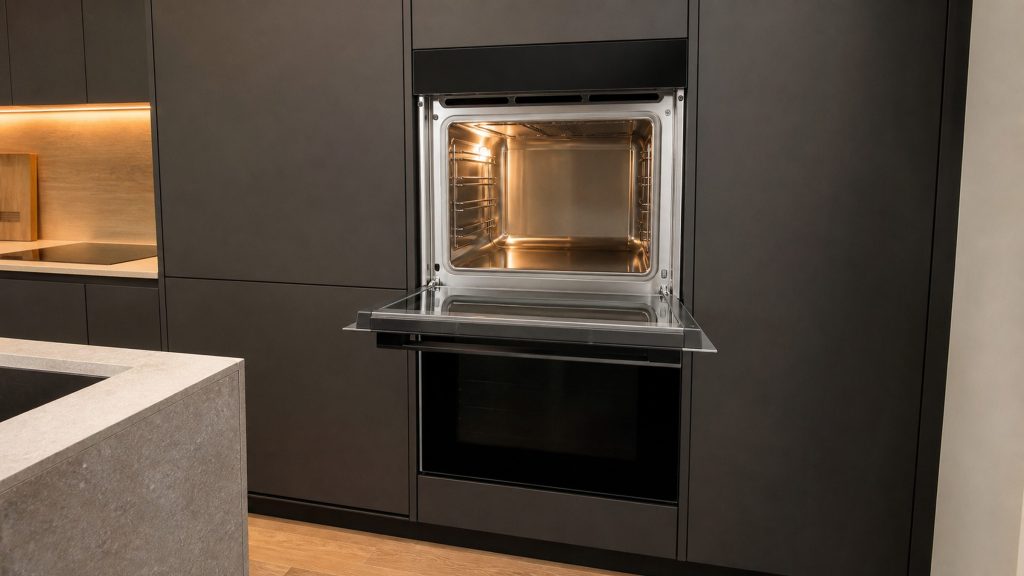
Twenty machines: single ovens, double ovens, the microwave-combination towers that are two appliances in one cabinet, and the speed ovens. Almost all of them are built into a run of cabinetry, which decides more about the appointment than the repair itself does — a wall oven has to come out of its housing before anybody can reach the back of it.
- Heating to the wrong temperature, or taking far too long to get there
- The convection fan running loud, or not running
- A control panel that lights and will not respond

Questions people ask about this
So is F2E1 a serious code?
It depends entirely on which appliance is showing it, and that is not a dodge — it is the actual answer. The same four characters appear on more than one machine on this platform and describe different conditions on each, because the F is numbered against that appliance's own list of functions. This is why every code page on this site has the appliance in its title, and why the first question anybody asks you is what machine it is on.
The manual for a different brand shows my code. Is that a coincidence?
No, and it is worth understanding rather than dismissing. JennAir, KitchenAid, Whirlpool, Maytag and Amana belong to one corporation and share a control platform, and the error tables are shared with them. A page under another of those badges describing your code is frequently describing your machine correctly. We would rather tell you that than pretend the number is a secret only we hold.
What do I actually do when a code appears?
Write it down exactly — all four characters, in order — and note which appliance and what it was doing at the time. Then try the free step: one full minute off at the breaker. Sixty seconds, not a flick. On this platform that is the entire published instruction for a large share of the conditions in the table, and it clears a control that has latched rather than failed. If the code returns, you now have something precise to tell somebody.
The code cleared by itself. Should I still call?
Note it and watch. A code that appears once and clears is often a one-off — a brownout, a door left open, a sensor reading briefly out of range. A code that comes back on a pattern is telling you something real, and the pattern is the useful part: how often, doing what, after what. That is worth more to a diagnosis than the code alone.
My display shows PO or PF instead.
Those are not failure codes. Two letters with no number is the giveaway — they are power-outage notices, telling you the appliance recorded a temperature rise while it had no power. They clear by acknowledging them, and they say nothing about whether anything is wrong.
My cooktop shows E90 rather than F-and-E.
Induction cooktops on this platform use a different alphabet — E and two digits — because the control is a different design. It is the same manufacturer and a different numbering scheme, which is exactly the sort of thing that makes people think their machine is unusual. It is not; it is simply on the other table.
Troubleshooting
More guides like this one
-
Storm Week: Most of These Appliances Are Not Broken
In the week after a storm a large share of the calls we take are appliances reporting an outage rather than failing. Three free steps clear most of it, and the least dramatic one is the one that fixes the most.
Read more -
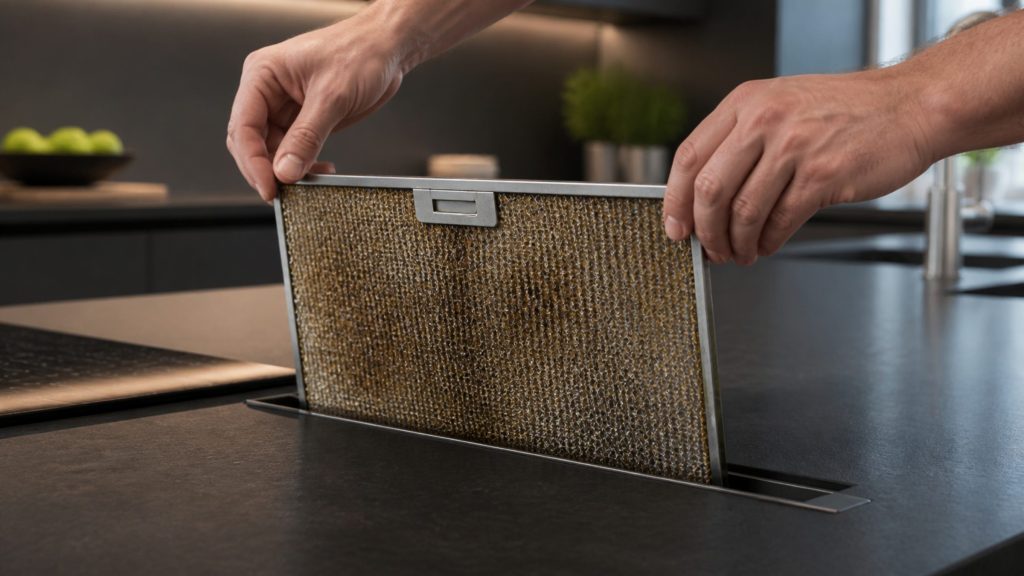
Your JennAir Downdraft Runs and the Kitchen Still Fills With Steam
Five things stop a downdraft and three of them are not the appliance. Here is the order to check them in, starting with a test that costs nothing and a filter most people have never taken out.
Read more -

Fill, Freeze, Harvest: Which Half of Your Ice Maker Has Stopped
An ice maker does three things and every one of them ends with no ice. One look tells you which — and half the answers are plumbing rather than the appliance.
Read more
Tell us the model number and what it is doing.
This article is based on:
- Official manufacturer documentation
- Internal repair procedures
- Technician repair history
- Company quality standards