
Common Problems
Your Freezer Was Fine All Winter and Started Frosting in June
A frost-free freezer makes ice on its evaporator all the time and melts it off on a cycle. Frost that starts winning means one of four things has stopped keeping up: the defrost heater, the sensor that calls for the cycle, the control that runs it, or the drain that carries the melt away. There is a fifth cause and in this climate it is the most common of all — a door seal that is merely tired rather than failed. Every door opening in August brings in air carrying several times the water it carries in February, so a marginal seal or a partly closed drain copes perfectly all winter and stops coping in summer, with nothing having actually broken. Check the door with a banknote before assuming a part, and do not simply defrost it manually: that removes the symptom and leaves the cause, so it comes back sooner.
The full guide
Why does my freezer have frost all of a sudden? Nothing Broke in June
This is one of the most common calls we take between June and October, and the sentence is almost always the same: *it was completely fine all winter.*
That is usually true, and it is also the diagnosis. A Miami summer puts more water into the same kitchen air than a Miami winter does, and a freezer that coped in January is being asked to remove several times as much of it in August.
On a JennAir the machine in question is often a panel-ready freezer column, which makes the door seal and the panel behind it worth checking before anything electrical.
A frost-free freezer is in a permanent argument with moisture. It makes ice on its evaporator coil continuously, and it melts that ice off on a cycle — a heater, a sensor to decide when, a control to run it, and a drain to carry the water away. As long as the cycle removes more than the door lets in, you never see frost.
Every time the door opens in a South Florida August, the air that goes in carries several times the water it carried in February. So a cabinet whose seal is a fraction proud, or whose drain is partly closed, copes all winter and stops coping in summer.
Something did not break. Something was marginal, and the season found it.
Haze or Sheet?
The distinction that decides whether this is a repair:
- A light haze on packaging — normal. Every cabinet does it.
- A sheet of ice on the back wall — the defrost cycle is not clearing the evaporator.
- Ice on the floor of the cabinet — the melt has nowhere to go. That is the drain.
- Frost that returns within days of being cleared — the cause is still there.
The Free Check, and It Is the Commonest Cause Here
Take a banknote and close it in the door. Do it at six or eight points around the perimeter, including the hinge side, which is where gaskets usually give up first, and the corners, which are hardest to see.
Anywhere it pulls out with no resistance, warm humid air is being drawn in continuously — and in this climate that alone can outrun a perfectly healthy defrost cycle.
While you are there: is anything holding the door a fraction open? A drawer not pushed home. A package sitting on a shelf edge. A bin out of position. All free, all common.
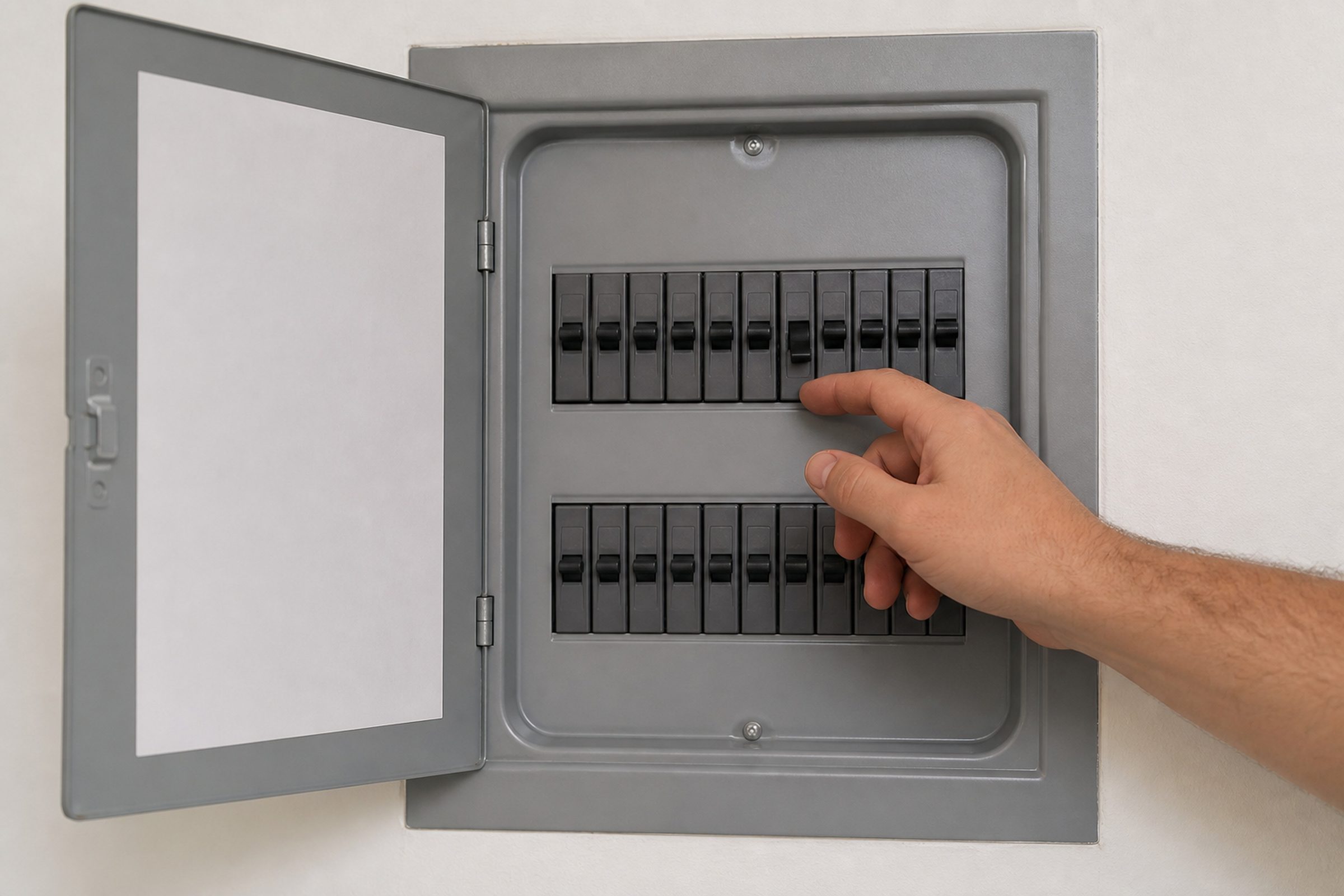
And on this make there is a second version of the same answer worth knowing: most of the refrigeration here is panel-ready, so the door is your cabinetmaker's, hung on the appliance's hinges. Hardware that has worked loose does everything a failed gasket does, and it is a smaller job again.
The Four Real Causes
When the door is genuinely sealing, the frost is telling you about the cycle:
The defrost heater. The element that melts the coil clear. When it goes, ice accumulates until air cannot pass, and the cabinet starts drifting warm as well as frosting.
The sensor. What decides that it is time to run a cycle, and how long. Reading wrong, it never calls for one, or calls for one too short.
The control. Which actually runs it. Same symptom, third part.
The drain. The cycle runs, the ice melts, and the water has nowhere to go because the drain has iced closed. It refreezes on the cabinet floor, or finds its way out and onto yours.
All four look identical from the kitchen, and all four are measured rather than guessed at. The drain is the cheapest of them and the heater the dearest, and neither is at the top of this site's price list.
Why Manually Defrosting Is a Delay
It works. That is the problem.
Empty the cabinet, switch it off, let the ice melt, dry it out, and the freezer will behave for a while. What you have removed is the ice. What you have not touched is the reason the cycle stopped clearing it — so it comes back, and generally sooner than the first time, because the second round starts from a coil that is already compromised.
Do it if you need the freezer working this week and the visit is Thursday. Do not do it as an alternative to the visit.
Water Underneath Is a Different Urgency
Frost inside can wait a week. Water arriving underneath the cabinet is reaching your cabinet base and your flooring, and in a built-in kitchen it does that for a long time before anybody sees a puddle on tile.
If there is water under the appliance, or a dark line along the front of the plinth, that is worth a same-day call rather than a note in a diary.
The Columns Make It Easier
The standalone freezers on this make are panel-ready columns designed to stand beside a refrigerator column. If you have a pair, the diagnosis starts from a very strong position: two complete appliances sharing a wall, so whatever the frosting one is doing, the one next to it has already eliminated the house, the room and the installation.
It also means the contents have somewhere to go for the day.
What to Have Ready When You Call
The model number. Whether it is a haze or a sheet. Whether there is water underneath. Whether the cabinet next to it is behaving. And whether the door passes the banknote test.
We repair this equipment across Miami-Dade, Broward and Palm Beach.
If it turns out to be a repair
What this leads to, and what it costs
Every job on this site is priced the same way: an on-site diagnostic first, the figure agreed in writing before anybody starts.
-

from $165 Freezer frost & drain service
Frost winning against the defrost cycle, ice on the floor of the cabinet, or water underneath it. On a frost-free column any of those means the defrost circuit is not doing its job, and it gets worse rather than settling.
- The evaporator looked at rather than guessed at
- Defrost heater, sensor and control measured in turn
- The drain cleared and proved to run
-
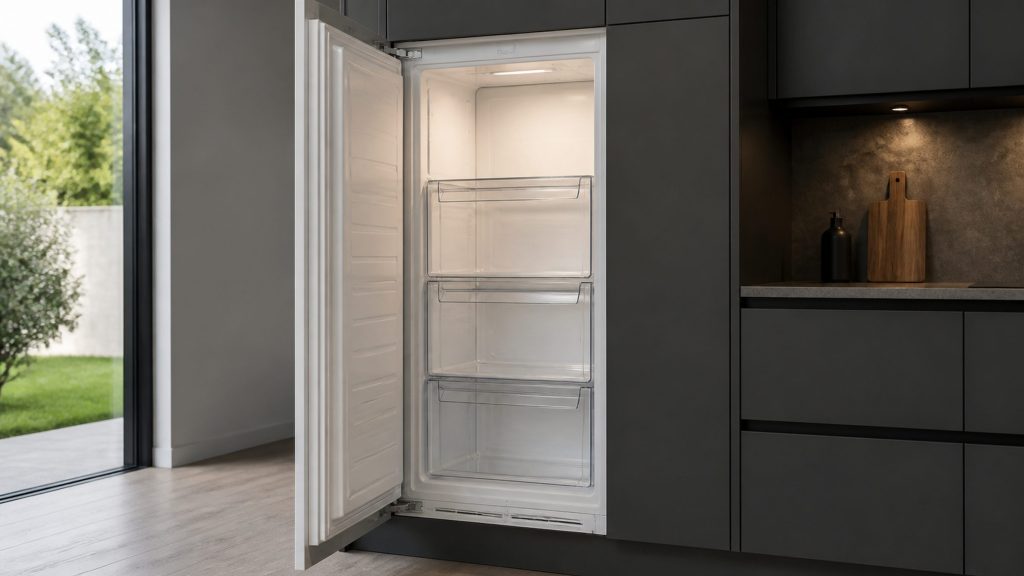
Panel-ready columns · 18" · 24" · 30" · Single temperature Freezers
This make builds three standalone freezers and they are all the same idea: a panel-ready column, single temperature, meant to stand beside a refrigerator column behind matching cabinetry. That is the whole row, and it is a short one on purpose. The freezer half of a combination cabinet is covered on the refrigerator page, because that is the same appliance.
- Frost building up faster than the defrost cycle clears it
- The column running warm while the one beside it is fine
- Ice on the floor of the cabinet, or water underneath it
Questions people ask about this
How much frost is normal?
Very little on a frost-free cabinet. A light haze on packaging is nothing. A sheet on the back wall, ice on the floor of the cabinet, or frost that returns within days of being cleared means the defrost circuit is not keeping up. It is a real repair, it is usually not an expensive one, and it gets worse rather than settling down.
Can I just defrost it myself?
You can, and it will work for a while — which is exactly the trap. Clearing the ice removes the symptom and leaves whatever stopped the cycle, so it returns, usually sooner than the first time. Do it if you need the cabinet working this week. Do not do it instead of finding out why.
There is ice on the floor of the freezer.
That is the drain rather than the heater: the defrost cycle is running, the ice is melting, and the water cannot leave. It refreezes where it lands. It is a smaller repair than a heater and it is worth doing before the water finds its way out of the cabinet and into your flooring.
Why would humidity make this much difference?
Because every cubic foot of air that enters a cold cabinet leaves its water behind, and warm air holds a great deal more of it. In February the defrost cycle clears what comes in comfortably. In August the same cycle, on the same cabinet, with the same slightly proud gasket, is being asked to remove several times as much — and it falls behind. Nothing changed except the season.
My freezer is the bottom drawer of a French-door cabinet, not a column.
Then it is one appliance with the refrigerator above it, and the sealed system, the defrost circuit and the control are shared. The diagnosis is the same but the stakes are different, because a defrost problem there affects the whole cabinet rather than one door.
Common Problems
More guides like this one
-
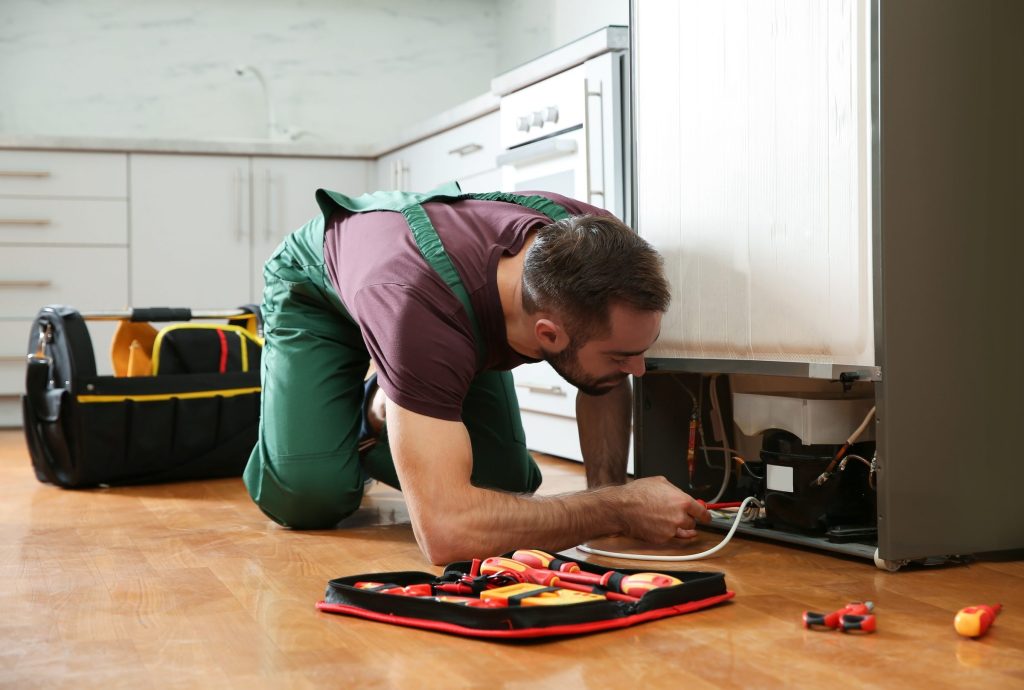
Clicking, Humming, Knocking: Which Refrigerator Noises Matter
Most of what a refrigerator does is audible, and almost none of it is a problem. The question that sorts one from the other is not what the noise sounds like — it is when it happens.
Read more -
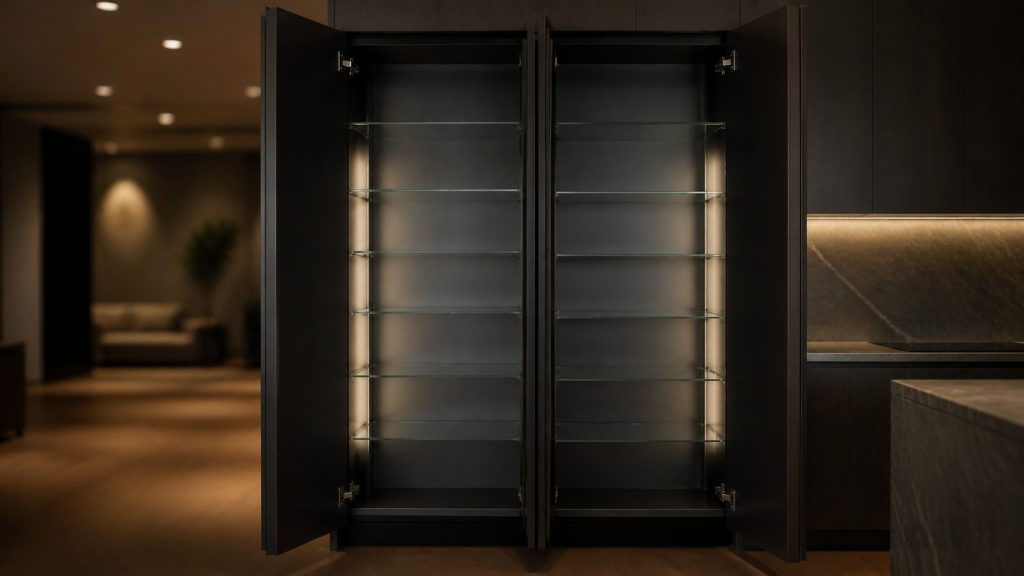
A Warm Fridge and a Cold Freezer Is the Cheapest Sentence in This Business
Most people say the refrigerator has stopped. The useful sentence is narrower than that, and it moves the answer from the most expensive repair on the site to one of the cheapest.
Read more -
Two Degrees Wrong for Six Months Is Worse Than Broken
A wine cabinet almost never stops outright. It drifts — and a cabinet that has been two degrees warm since March is discovered in November, by which time the damage is done and nothing on the appliance ever reported a problem.
Read more
Tell us the model number and what it is doing.
This article is based on:
- Official manufacturer documentation
- Internal repair procedures
- Technician repair history
- Company quality standards