Troubleshooting
Your Induction Zone Cuts Out. The Problem Is Probably the Island
An induction zone that cuts out mid-cook is almost always one of two things, and neither is a failed cooktop. The first is the pan: induction needs a base a magnet holds firmly and sits flat, so a warped base, a thin disc bottom or an aluminum pan produces a zone that will not start, drops out, or reports an error. Test it with a magnet in ten seconds. The second is heat, and it is the commonest cause in this city: the electronics under the glass make heat of their own and are cooled by a fan pulling air through the cabinet, the installation instructions specify an opening and a clearance for that, and a beautiful sealed island finished afterwards does not know about either. Open the cabinet under the cooktop and look. If the same zone still fails with a good pan and clear air underneath, then that zone's power board or its sensor is the repair.
The full guide
Jenn Air induction cooktop not turning on: two tests, no tools, ten minutes
Before anything else, do these:
One: put a magnet on the base of the pan. Not the side — the base, in the middle. It has to *grip*, not tug politely. If it barely holds, that pan will never work properly on induction no matter what the cooktop does.
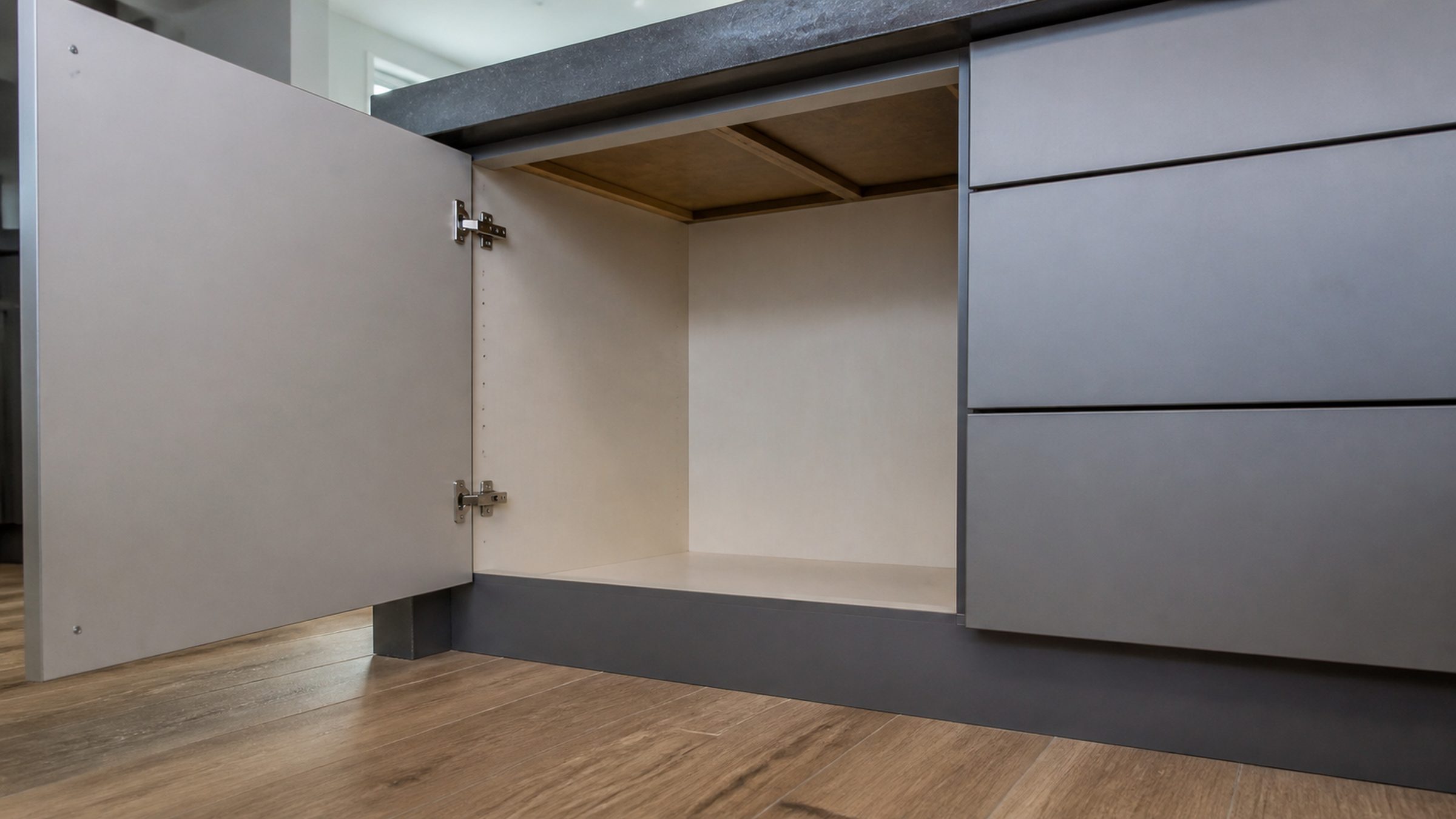
Two: open the cabinet underneath the cooktop and look at it. Is there anywhere for air to come from? Is a drawer stack pushed hard up against the underside? Is the space packed with pans and boxes?
That second test matters more on a JennAir than on most makes, because two of its induction cooktops have a downdraft blower sharing the same cabinet, and a South Florida island is usually sealed on every side.
Between them, those two account for most of the induction calls we take in this city, and neither costs anything.
Why the Cabinet Is the Common One Here
Induction is often described as though the heat happens entirely in the pan, and the useful part of that is true — the glass stays comparatively cool and the cooking is fast.
What is left out is that the electronics doing it sit directly under the glass, in a box, in a cabinet, and they run warm. Each cooking position has a power board, and those boards are cooled by a fan that draws air through the cabinet space and pushes it back out.
The installation instructions specify exactly that: an opening of a certain size, a clearance of a certain depth, an air path in and an air path out.
Now think about how a luxury kitchen actually gets built. The appliances go in. Then the joinery is finished around them — a sealed island with a beautiful continuous stone top, a bank of drawers running the full width beneath, a kick panel fitted flush to the floor. Nothing in that process reads the appliance manual.
The cooktop then works exactly as designed, in a space that was not designed for it. And it reports that the only way it can: a zone that cuts out under load and comes back later.
Why the Pan Matters More Than People Expect
Induction transfers energy into ferrous metal. A magnet is a perfect proxy for that, which is why the test is so blunt.
The failures are specific:
- Aluminum or copper with no magnetic base — the zone will not start at all.
- A thin magnetic disc bonded to an aluminum pan — it starts, and cuts out when it gets hot, because the disc is not enough for sustained power.
- A warped base — it starts, works at low power, and drops out when the demand rises, because the contact area is too small.
That last one is the sneaky one, because the pan looks fine. Put it on a flat counter and see if it rocks.
Timing Tells You Which Half It Is
Note how long it takes to fail:
- Immediately, every time, on one zone — cookware or that zone's electronics.
- After twenty minutes of hard use — thermal, almost always. The board has reached its limit and shut down to protect itself.
- The whole cooktop, all zones, after a while — the cooling side rather than any position. The fan, its path, or the cabinet.
That single sentence is worth more on the phone than any description of what the display showed.
When It Genuinely Is the Appliance
It happens, and here is the good news about it: there is one power board per cooking position, not one for the whole cooktop. So a failed zone is a failed zone. The rest of the surface keeps working while a part is on order, and you are not without a cooktop.
The parts that actually fail:
- the power board for one position;
- the temperature sensor under the glass for that zone;
- the cooling fan, which takes everything down rather than one zone;
- the user interface, which is a different repair again.
And the glass, which is not a repair but a rule: a cracked induction surface goes off at the breaker and stays off. The glass is structural, and it is what keeps a spill off the electronics we have just spent this page talking about.
Please Leave It Running
The one request that helps most: if a zone is misbehaving intermittently, do not switch the cooktop off and leave it before the visit. Intermittent electronics are diagnosed running, under the load that produces the problem. A cooktop that has been off for two days will behave perfectly for the first twenty minutes and then somebody has to come back.
What to Have Ready When You Call
The model number, which is underneath and usually needs a phone camera held up into the cabinet. Which zone, or whether it is all of them. How long it takes to fail. And whether the cabinet underneath has an opening in it.
We repair this equipment across Miami-Dade, Broward and Palm Beach.
If it turns out to be a repair
What this leads to, and what it costs
Every job on this site is priced the same way: an on-site diagnostic first, the figure agreed in writing before anybody starts.
-
from $225 Induction cooktop repair
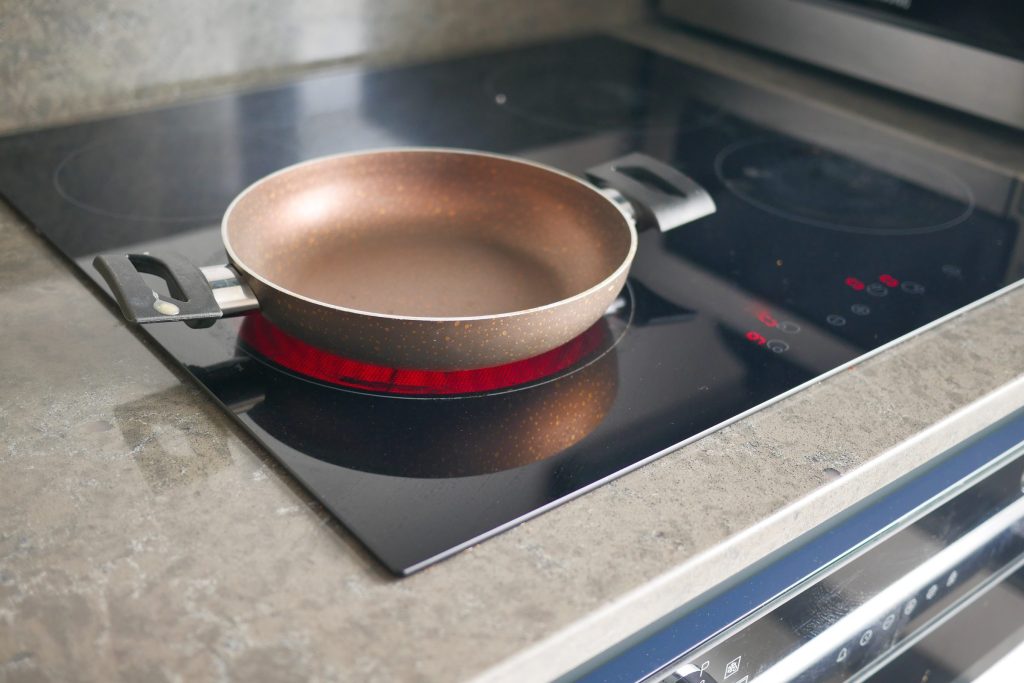
A zone that cuts out under load while the others keep going, an error that appears with a big pan and not a small one, or a cooktop that shuts down after twenty minutes. On induction, most of these are heat and air rather than a failed part.
- The air the installation actually gets, measured first
- Zone behavior proved with the right pan and the wrong one
- Power board and sensor separated before anything is ordered
-
Induction · Radiant · Gas · Downdraft · Rangetops · Euro-Style · 30" · 36" · 45" · 48" Cooktops and rangetops
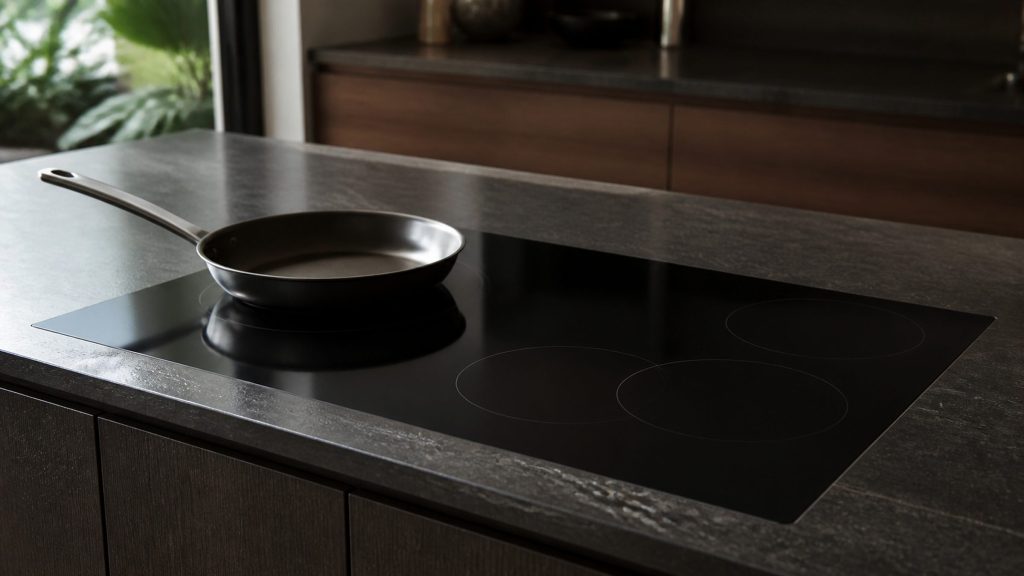
The widest row on this site: thirty-nine cooktops and fourteen professional rangetops, which are the same repair under a different word. Induction, radiant glass, sealed gas, and the downdraft cooktops that pull the steam down through the counter instead of up into a hood — an idea this maker invented and still sells.
- One induction zone cutting out while the rest keep going
- A gas burner clicking without lighting, or lighting and dropping out
- A downdraft that runs but no longer pulls

Questions people ask about this
It works with some pans and not others. Is that a defect?
No — that is the appliance working correctly. Induction makes heat in the pan itself, so the pan has to be able to take part: a magnet must hold firmly on the base, and the base must sit flat on the glass. A warped base, a thin disc bottom sandwiched into an aluminum pan, or plain aluminum will each give you a zone that will not start, cuts out under load, or shows an error. Ten seconds with a magnet settles it before anybody is called.
Why would the cabinet underneath matter?
Because the electronics that make the heat sit under the glass and make heat of their own. They are cooled by a fan that pulls air through the cabinet and pushes it out again, and the installation instructions specify an opening and a clearance for that path. A sealed island built beautifully after the appliance went in leaves the cooktop working exactly as designed in a space that was not, and it reports that as an intermittent zone rather than as an installation problem.
The whole cooktop shuts down after twenty minutes, not one zone.
That is a protection working, and it is telling you about temperature rather than about any single position. All of it going, rather than one, points at the cooling side — the fan, its path, or the cabinet — instead of at a coil or a board. It is also the version of this most likely to end without a part at all.
Is induction less reliable than gas?
Different rather than worse. There is nothing to clean, nothing to seat wrong, no ignition to go and no ports to block. What there is instead is electronics with a thermal limit, which means the installation matters far more than it does on gas — and that is exactly where most of these calls actually land.
One zone is dead and the rest are perfect. How bad is that?
Better than it sounds. There is a power board per position rather than one for the whole cooktop, so a failed zone is not a failed appliance and the rest stays usable while a part is on order. It is also the least likely of the possibilities — the cabinet and the cookware come first.
Troubleshooting
More guides like this one
-
F2E1 Is Two Numbers. Reading It as One Loses the Diagnosis
Four characters on a small display, and almost everybody reads them as a single token. They are two halves with two different jobs, and treating them as one is how people end up looking up somebody else's problem.
Read more -
Storm Week: Most of These Appliances Are Not Broken
In the week after a storm a large share of the calls we take are appliances reporting an outage rather than failing. Three free steps clear most of it, and the least dramatic one is the one that fixes the most.
Read more -
Your JennAir Downdraft Runs and the Kitchen Still Fills With Steam
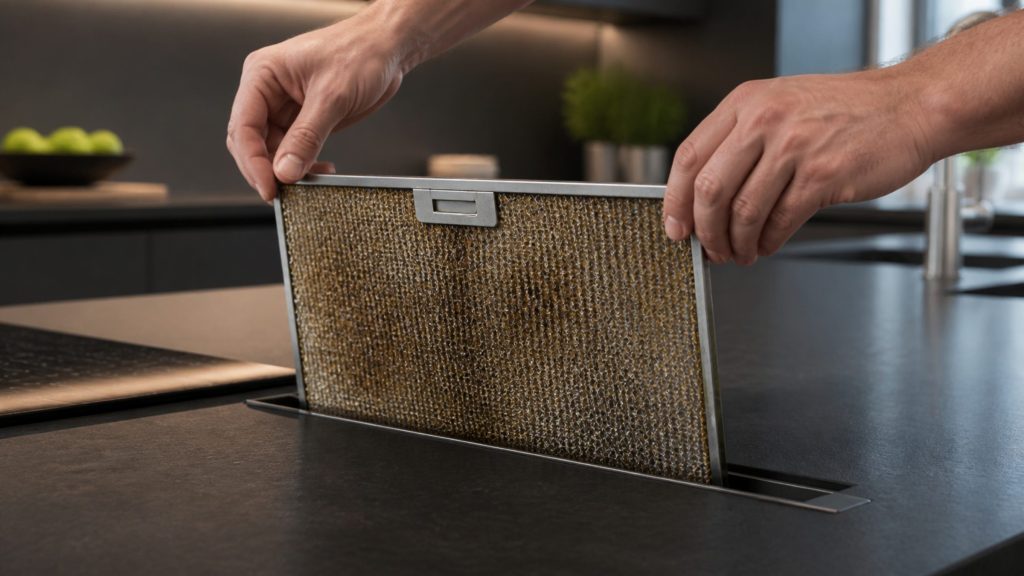
Five things stop a downdraft and three of them are not the appliance. Here is the order to check them in, starting with a test that costs nothing and a filter most people have never taken out.
Read more
Tell us the model number and what it is doing.
This article is based on:
- Official manufacturer documentation
- Internal repair procedures
- Technician repair history
- Company quality standards