
Troubleshooting
Fill, Freeze, Harvest: Which Half of Your Ice Maker Has Stopped
An ice maker fills, freezes and harvests, and a failure at any of the three ends the same way. The one look that separates them costs nothing: is there water sitting in the mold? Water and no ice means the freezing side. Ice that is made and will not drop means the harvest — a heated release and a mechanical push, either of which can be the reason. No water at all means the plumbing: a shut-off valve, a filter at the end of its life, an inlet valve, or a plug of ice in the fill tube, which is the cheapest outcome there is. Before any of that, check the arm or switch has not been knocked to off, and on an undercounter machine check that the grille at the base is clear, because a machine that cannot shed its heat makes less ice with nothing broken.
The full guide
Why is my jenn air ice maker not working? Three Jobs, One Complaint
A JennAir kitchen frequently has two of these — the one in the refrigerator and a 15-inch undercounter machine — and they fail for different reasons, so it is worth knowing which one you are standing in front of.
An ice maker does three separate things:
- Fills — water arrives in the mold.
- Freezes — it turns to ice.
- Harvests — the ice lets go and drops into the bin.
Any one of those failing produces exactly the same outcome, which is why "no ice" is such an unhelpful sentence and why almost every page about it starts with a parts list.
There is a better first move, and it takes a second.
Look for Water in the Mold
Open it and look at the tray or mold where the ice forms.
- Water and no ice — the fill worked, the freeze did not. Look at the temperature, the airflow, and whether the compartment is genuinely cold.
- Ice made and still sitting there — the harvest did not release. That is a heated element and a mechanical push, and either can be the reason.
- Nothing at all, dry — the water never arrived, and the problem is in the plumbing rather than the machine.
That one observation moves you from "it is broken" to "it is one of three things", and two of those three have free causes at the top of them.
The Free Causes, In Order
The arm or the switch. Every ice maker has a way of being told to stop. A shut-off arm knocked upward by a package, or a switch turned off during a clean and never turned back on. It is the most embarrassing answer and it is genuinely common.
A frozen fill tube. The little tube that carries water into the mold runs through a cold space, and it freezes solid. Production stops completely. Clearing it costs the visit and no part at all, and it is one of the most frequent things we find.
The filter. A cartridge past its life restricts flow. The mold never fills properly, the ice comes out small and cloudy, and eventually it stops. Change it before you assume anything mechanical.
The supply valve. Behind or under the cabinet, on the line feeding the appliance. It gets closed during plumbing work and never reopened. Free to check with a torch.
The grille — on an undercounter machine. These breathe through the toe kick. In a kitchen where the cabinetry was finished after the appliances went in, that grille is regularly closed off by a kick panel fitted flush or a run built tight around it. The machine then works exactly as designed in a space that was not, and makes noticeably less ice with nothing at all wrong inside it.
Quality Goes Before Quantity
An ice maker in trouble usually makes worse ice before it makes less, and less before it makes none.
Cloudy, soft, small cubes are the early warning. At that point the answer is nearly always a filter and a clean. Waiting until the bin is empty means paying for a repair instead of a service, and the two are not close in price.
If your ice has changed character in the last month, that is the moment.
Why Cloudy Ice Is About Flow
A machine that makes clear ice does it by freezing water in layers, slowly, so that dissolved air and minerals get pushed ahead of the advancing ice rather than trapped in it.
Slow the flow down — scale in the path, a tired filter, a partly blocked line — and the layering breaks down. The air and the minerals stay where they are. You get cloudy ice, and it is softer because it is full of them.
So cloudy ice is a water message, not a temperature one, and the fix is a clean and a cartridge rather than a thermostat.
The Undercounter Machines Want Cleaning Twice a Year
More often than the manual assumes, for two South Florida reasons: the water, and the cabinet.
A proper clean is not wiping out the bin. It is the reservoir, the distributor, the surface the ice actually forms on, the pump and its path, and the bin sensor that decides when to stop. Deposit collects in every one of those, and the machine slows down gradually enough that nobody notices until it is a service call.
The blunt version: most ice machine calls in this city are a cleaning that was left too long. A cleaning is cheaper than a visit. A pump is dearer than both.
Please do not use a household descaler. This appliance makes something you put in a glass, and the products made for it are made for that reason.
What to Have Ready When You Call
The model number. Whether there is water in the mold. When it was last cleaned — that last one settles more of these than anything else. And, if it is an undercounter machine, whether it is indoors or out.
We repair this equipment across Miami-Dade, Broward and Palm Beach.
If it turns out to be a repair
What this leads to, and what it costs
Every job on this site is priced the same way: an on-site diagnostic first, the figure agreed in writing before anybody starts.
-
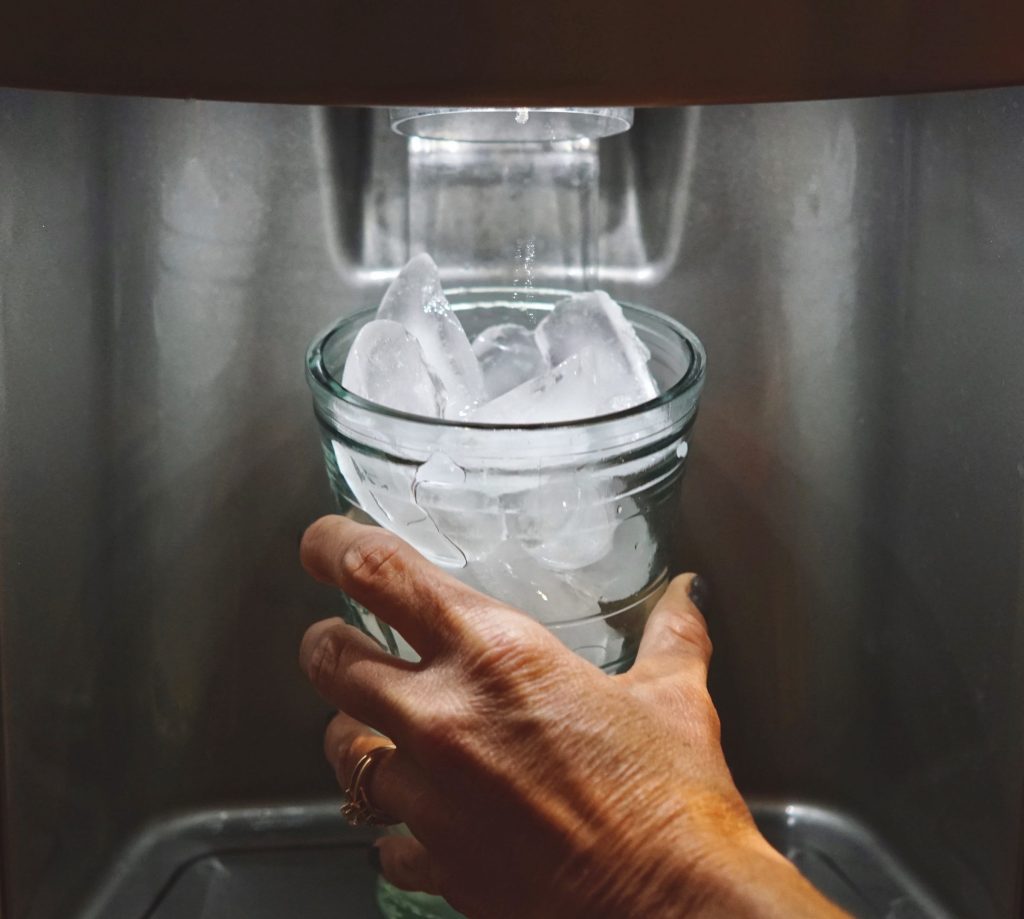
from $195 Ice maker fill & harvest repair
A machine that fills and never releases, or one that never fills at all. Freezing and harvesting are two different halves and they fail for different reasons — which half yours is decides the repair.
- Fill and harvest tested as separate stages
- A frozen fill tube ruled out before any part
- Bin sensor checked, because it causes both complaints

Questions people ask about this
Why has my ice gone cloudy and soft?
Usually a slower freeze or a dirtier water path rather than a temperature problem. A machine that makes clear ice freezes water in layers so that air and minerals are pushed out ahead of the ice; when the flow through that path drops — scale, a partly blocked line, a filter nobody has changed — it traps them instead. It is a cleaning and water question far more often than it is a repair.
It fills with water and then just sits there.
That is a harvest problem: the machine has made the ice and cannot let go of it. On these units the release is a heated one combined with a mechanical push, and either half can be the reason. It is also sometimes a machine standing in a cabinet too warm or too tight to shed heat, which is free to check before you book anything.
The ice maker in my refrigerator and the one under my counter — same repair?
The same principles in a different place. Inside a refrigerator the ice maker is part of that cabinet, and on a French-door design the ice has to travel through the warm fresh-food section to reach the door — which is why frozen lines and clogged chutes are far more common there than on any other layout. An undercounter machine is a complete appliance with its own sealed system, its own supply and often its own drain.
How often does an undercounter machine need cleaning?
Twice a year for one in regular use here, which is more often than the manual assumes — because of the water, and because these live in warm cabinets. The honest reason to bother is that most ice machine service calls in this city are a cleaning that was postponed until it became a symptom, and a cleaning is cheaper than a visit while a pump is dearer than both.
Mine is outside in an outdoor kitchen.
Then it is working much harder: higher ambient temperature, salt in the air on a coastal property, and often a supply line sitting in the sun. Say so when you book, because the diagnosis starts somewhere different. It is also worth knowing that the maker's own warranty excludes corrosion caused by high salt concentrations, high moisture or humidity — in those words — which is a reason to keep the exterior maintained rather than a reason to worry.
Troubleshooting
More guides like this one
-

F2E1 Is Two Numbers. Reading It as One Loses the Diagnosis
Four characters on a small display, and almost everybody reads them as a single token. They are two halves with two different jobs, and treating them as one is how people end up looking up somebody else's problem.
Read more -
Storm Week: Most of These Appliances Are Not Broken
In the week after a storm a large share of the calls we take are appliances reporting an outage rather than failing. Three free steps clear most of it, and the least dramatic one is the one that fixes the most.
Read more -
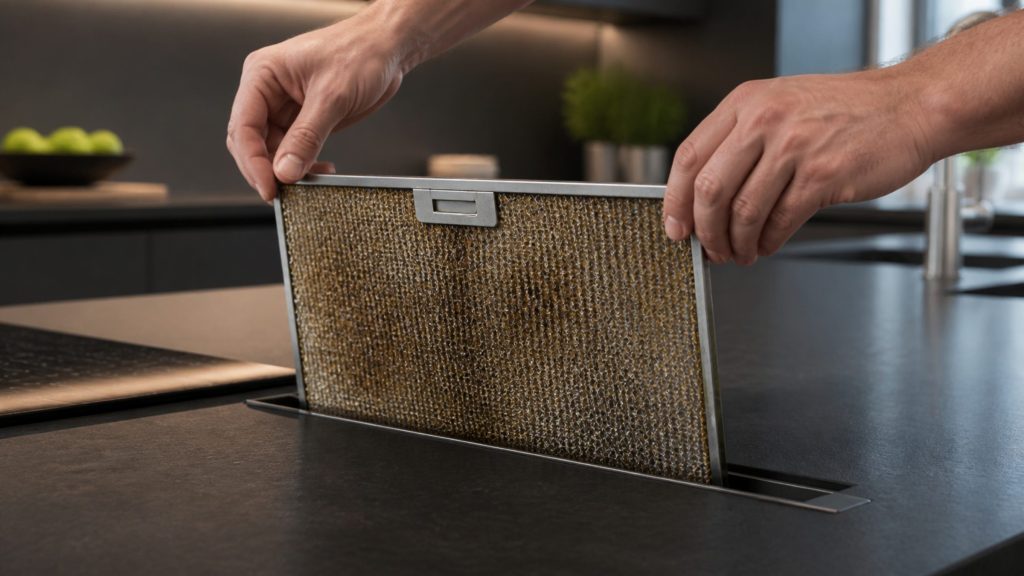
Your JennAir Downdraft Runs and the Kitchen Still Fills With Steam
Five things stop a downdraft and three of them are not the appliance. Here is the order to check them in, starting with a test that costs nothing and a filter most people have never taken out.
Read more
Tell us the model number and what it is doing.
This article is based on:
- Official manufacturer documentation
- Internal repair procedures
- Technician repair history
- Company quality standards