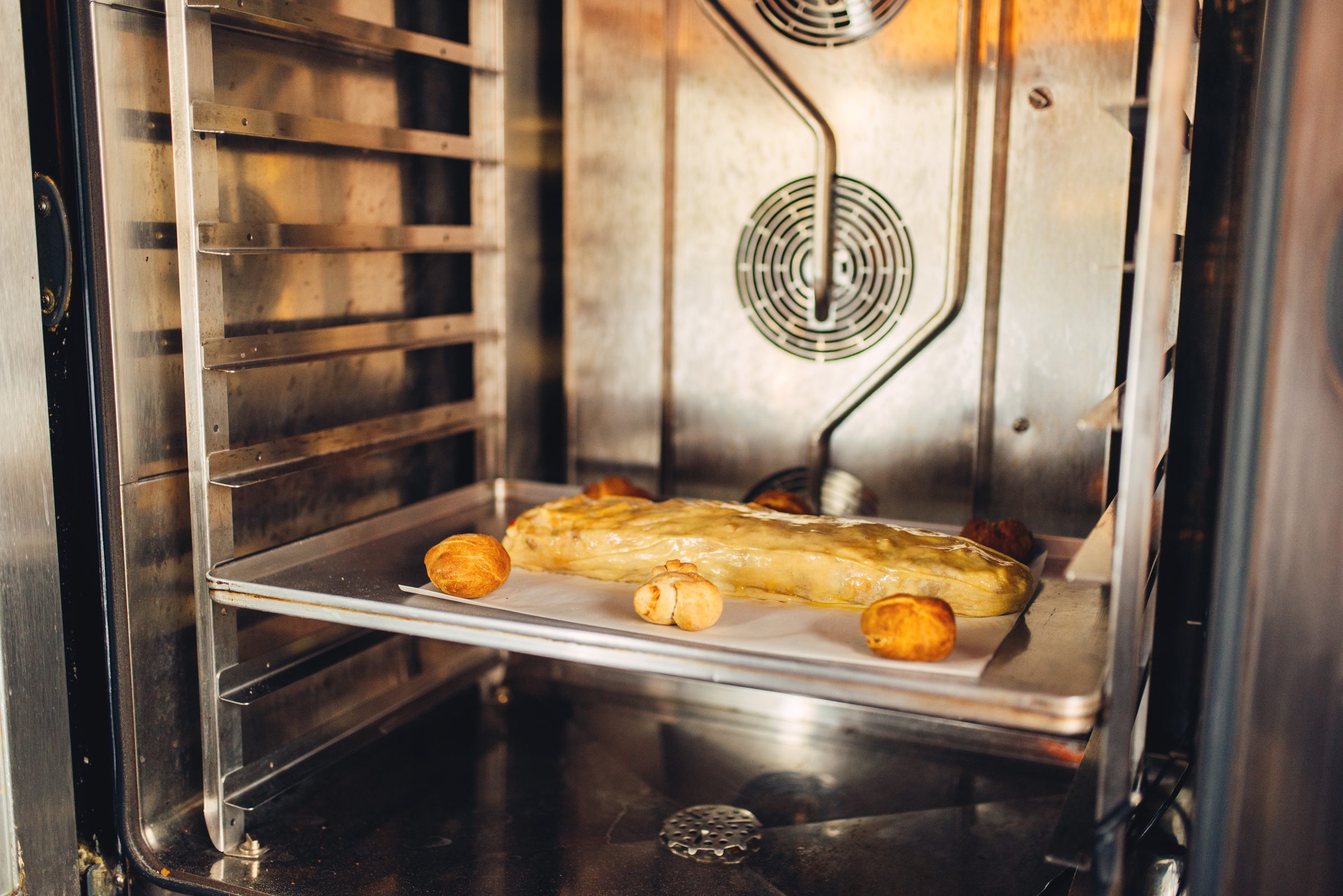
- “The oven stays cold and the display looks normal”
- “Preheat takes far longer than it used to”
- “One cavity of a double oven works and the other does not”
Symptom
JennAir the oven is not heating
A cavity that stays cold, or one that takes an hour to reach a temperature it used to hit in fifteen minutes. On a double oven, which cavity is the first thing that narrows it.
- From $95 diagnostic, credited to the repair
- 59 cities and neighborhoods covered
- OEM parts available on order
- In writing the price, before anything is opened
Five ordinary causes
What this usually turns out to be
Cheapest and commonest first, which is also the order we check them in. They sit hundreds of dollars apart, and only the unit settles which one is yours.
-
The bake or broil element
Failed open, which is often visible, or failing under load, which is not and has to be measured.
Oven heat & sensor repair from $215 -
The oven sensor
Reading badly wrong, so the control never asks for heat. A cheap part and a common answer.
Oven heat & sensor repair from $215 -
A control that has locked up
After an outage. A minute at the breaker clears many of these before anybody is called.
Cooking control & display repair from $275 -
The convection element or fan
On a convection cycle only. A conventional bake that works while convection does not is this rather than the main element.
Oven heat & sensor repair from $215 -
A thermal cut-out that has opened
Often after a self-clean cycle, and it is a symptom of what drove the heat rather than the whole story.
Oven heat & sensor repair from $215
In five minutes
Before you call anybody
None of it needs tools, and all of it makes the visit shorter.
-
01
A full minute at the breaker
Free, and it works often enough to be first.
-
02
Look at the bake element
Along the bottom of the cavity, cold, with a torch. A break or a blister is visible and definite.
-
03
Try bake and convection separately
One working and the other not is a completely different part.
-
04
On a double oven, try both cavities
One cavity out is that cavity. Both out is the supply or the control.
-
05
Then book it
Model number, which cavity, which mode, and whether it ran a self-clean recently. The last question matters more than it sounds.
How it shows up
What people describe when they call
A shortcut
Narrow it down before anybody arrives
A description of the behaviour leaves a few possible causes. A code names the subsystem before anybody opens anything, which is why it is worth photographing before it clears.
If the display is showing something
- F3E4 Location may vary
- F3E0 Oven Temperature Sensor · Control
- F2E1 Cleared at the temperature knob
- F3E4 Was the probe being used?
- F3E0 Upper Oven Temperature Sensor · Control
- F2E1 User Interface or Keypad · Control
Photograph it before it clears — codes do not wait. Search the full code list
In more detail
About JennAir the oven is not heating
The fastest diagnosis is the code
Switch it off at the breaker for a full minute and back on, then try again — a control that has locked up after an outage does exactly this and it is the one free repair. While you wait, look inside at the bake element along the bottom: a visible break, a blister or a bright spot is your answer and it is straightforward.
The display tells you nothing about the heat
People describe an oven that is not heating as "dead", and it almost never is. The panel, the clock and the fan are on one circuit and the elements are on another. A perfectly normal display over a cold cavity is the expected appearance of this problem rather than a contradiction — which is why the first useful observation is a thermometer rather than a screen.
The free minute
A full minute with the breaker off, then on. Controls that have locked up after an outage frequently come back, and in this city that accounts for a real share of the calls in the days after a storm. It costs nothing, it is the first thing we would do, and a condition that survives it is a genuine one — which is useful information in itself.
Access is the appointment
On a built-in wall oven the element, the sensor and the fan are reached from the back, which means the appliance comes forward out of a tall cabinet opening and goes back leveled and secured. The repair is often quick. That is why the figure on a wall oven sits where it does, and it is worth knowing before rather than after.
This article is based on:
- Official manufacturer documentation
- Internal repair procedures
- Technician repair history
- Company quality standards

Before you book
Questions about JennAir the oven is not heating
The display works but there is no heat.
That is normal for this failure and it is why people describe the oven as "on but dead". Everything that lights the panel is the low-voltage side; the heating is a separate circuit. A working display tells you the control has power and nothing about whether the element does.
It stopped working right after a self-clean.
A very common sequence, and worth saying on the phone. A pyrolytic cycle takes the cavity far above cooking temperature for hours, and it is the hardest thing an oven ever does to itself. A thermal cut-out that opened during one is a real repair — and replacing it without asking why it opened is doing the job twice.
Should I stop using self-clean?
Use it deliberately rather than never. Do not run one the night before a dinner you are cooking, and let the oven cool on its own afterwards. That is the whole of the advice.
It heats but takes forever.
That points at an element failing under load rather than one that has failed outright, or at a sensor reading high. Both read fine on a quick look and both need measuring — but they are ordinary parts, not the expensive end of the appliance.
Where we do it
Across Miami-Dade, Broward, and Palm Beach
Same terms everywhere we go: an on-site diagnostic first, the price agreed in writing, and the exact figure confirmed once we have seen the unit.
Neighborhoods people ask for by name