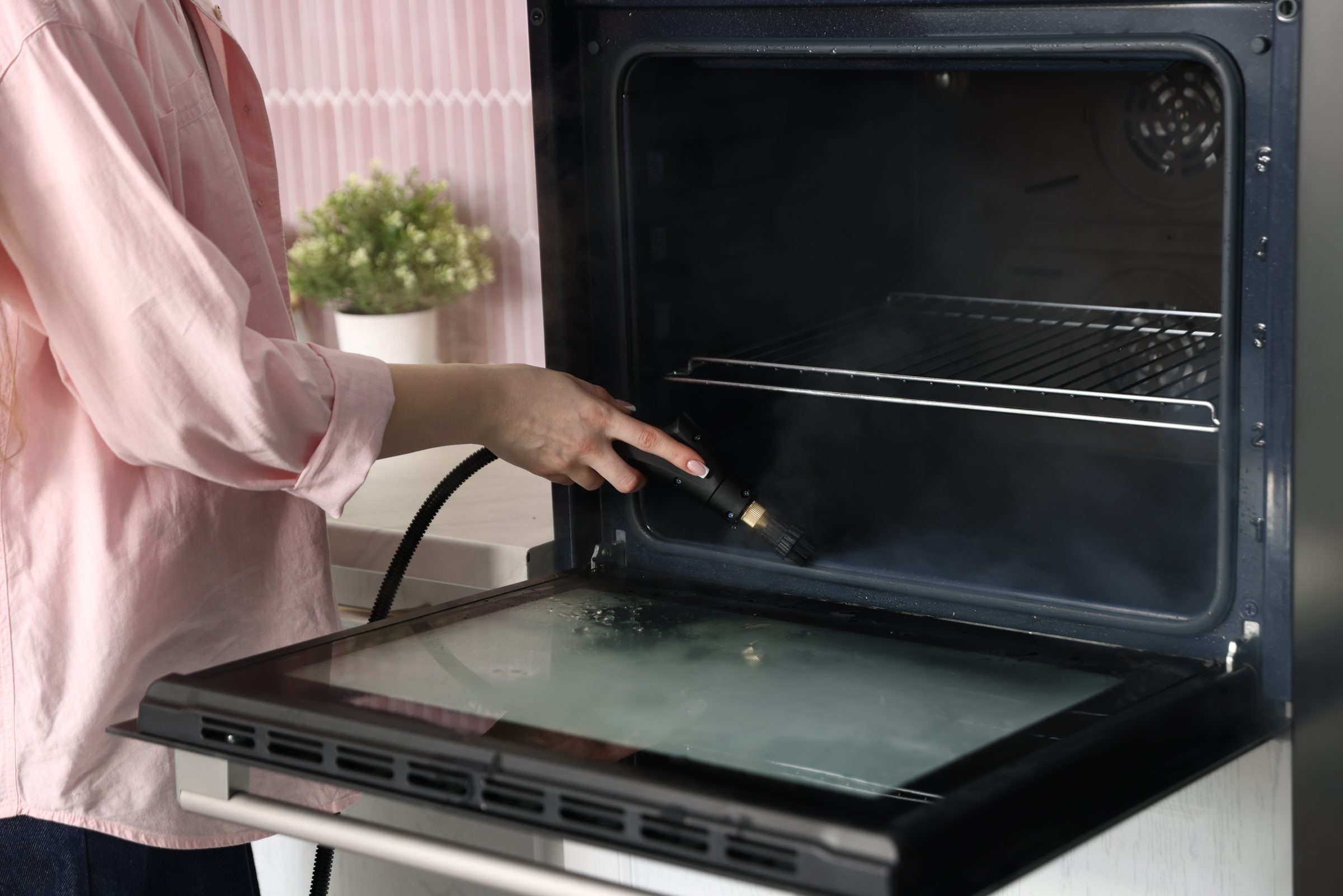
- “The door still locked hours after the cycle”
- “No heat at all since the clean”
- “A new code that was not there before”
Symptom
JennAir problems after a self-clean
A door that will not unlock, an oven that will not heat, or a control showing a code it never showed before — all appearing within a day of a cleaning cycle. Common enough to have its own page, and worth understanding before you run the next one.
- From $95 diagnostic, credited to the repair
- 59 cities and neighborhoods covered
- OEM parts available on order
- In writing the price, before anything is opened
Five ordinary causes
What this usually turns out to be
Cheapest and commonest first, which is also the order we check them in. They sit hundreds of dollars apart, and only the unit settles which one is yours.
-
The cavity still being hot
Not a problem at all. The interlock is doing its job, and patience is the whole fix.
-
The latch motor or its switch
The mechanism that drives the lock. A common repair and not an alarming one.
Oven heat & sensor repair from $215 -
A thermal cut-out that opened
A protective device that did what it was for. Replacing it without asking what drove the heat is doing the job twice.
Oven heat & sensor repair from $215 -
The oven sensor
Hours at extreme temperature is exactly when a marginal sensor gives up.
Oven heat & sensor repair from $215 -
The control
Last, and reached by measuring rather than by assuming, as always.
Cooking control & display repair from $275
In five minutes
Before you call anybody
None of it needs tools, and all of it makes the visit shorter.
-
01
Wait, and do not force the door
Forcing a locked oven door is how a latch repair becomes a door repair. Hours, not minutes.
-
02
Is the cavity actually cold?
Touch the glass. A door that is still warm has not earned a service call yet.
-
03
A minute at the breaker
Once it is genuinely cool. It clears a control that got confused rather than damaged.
-
04
Write down any code
A code that appeared during or after the cycle is the most useful evidence there is.
-
05
Then book, and say it followed a clean
It changes where we start and what we bring.
How it shows up
What people describe when they call
A shortcut
Narrow it down before anybody arrives
A description of the behaviour leaves a few possible causes. A code names the subsystem before anybody opens anything, which is why it is worth photographing before it clears.
If the display is showing something
- F3E0 Oven Temperature Sensor · Control
- F2E1 Cleared at the temperature knob
- F3E0 Upper Oven Temperature Sensor · Control
- F2E1 User Interface or Keypad · Control
Photograph it before it clears — codes do not wait. Search the full code list
In more detail
About JennAir problems after a self-clean
If you are looking up jennair oven self clean, this is the page: problems after a self-clean, what it usually turns out to be, and the check worth doing before anybody is called out in Miami.
The fastest diagnosis is the code
If the door is locked, give it time before anything else — the lock is a temperature interlock rather than a timer, and a large oven with the door shut can take a couple of hours to cool enough to release. Do not force it. If the oven is cold to the touch and still locked, or if it will not heat, switch it off at the breaker for a full minute and try once more before booking.
The cycle finds problems rather than causing them
A pyrolytic clean holds the cavity far above cooking temperature for hours. Everything in the appliance that was marginal — a latch mechanism, a sensor drifting, a thermal cut-out near its limit, a board sitting close to the heat — is tested harder than in any normal use. So failures cluster around self-clean not because the cycle is dangerous but because it is the appliance's hardest day, and it happens two or three times a year rather than daily.
The lock is not a timer
The door will not release until the cavity is genuinely cool, and on a large oven with the door closed that can be a couple of hours after the cycle ends. Every year somebody forces one, and a latch repair becomes a door repair. If it is cold to the touch and still locked, that is the mechanism and it is an ordinary job.
Why the cut-out matters more than the part
If a thermal cut-out has opened, something drove the temperature past where it should have gone: a blocked vent, a cooling fan that is not running, a sensor reading low so the control kept heating. Replacing the cut-out and leaving that is the definition of doing a job twice, and it is why this repair takes longer to diagnose than the part suggests.
This article is based on:
- Official manufacturer documentation
- Internal repair procedures
- Technician repair history
- Company quality standards
Before you book
Questions about JennAir problems after a self-clean
The door has been locked for three hours.
Still possible that it is simply cooling, especially on a large cavity with the door shut. If it is genuinely cold to the touch and still locked, that is the latch motor or its switch — a common repair. Do not force it: that turns a latch job into a door job and a door is far more expensive.
Why does self-clean break things?
Because it is the hardest thing an oven ever does to itself. A pyrolytic cycle takes the cavity far above any cooking temperature for hours, and everything marginal in the appliance — a latch, a sensor, a cut-out, a board near the heat — is tested harder than it ever is in normal use. Nothing is being broken by the cycle so much as found by it.
Should I never use self-clean again?
That is not the advice. Use it deliberately: not the night before a dinner you are cooking, not with the door forced shut against a warped seal, and let the oven cool on its own afterward rather than helping it. Wiping the cavity out with a damp cloth while it is still slightly warm after normal use means running the cycle far less often, which is the real answer.
It will not heat at all now.
A thermal cut-out that opened during the cycle is the usual reason, and it is a small part. What matters is asking why it opened — a blocked vent, a cooling fan not running, a cavity that ran hotter than it should. Replacing the part alone is how the same repair happens twice.
Where we do it
Across Miami-Dade, Broward, and Palm Beach
Same terms everywhere we go: an on-site diagnostic first, the price agreed in writing, and the exact figure confirmed once we have seen the unit.
Neighborhoods people ask for by name