
Cost Expectations
The Cartridge Cooktop in Your Nineties Kitchen Is Probably Still Repairable
A cartridge cooktop is built around interchangeable modules: the cooking surface is a frame with two bays, and each bay takes a cartridge that lifts out and swaps for another — two electric elements, two gas burners, a griddle plate, or the grill that made the design famous. Underneath, a downdraft blower draws smoke straight off the surface, which is what made an indoor grill in an island possible. They were built for decades and there are a great many of them still working in South Florida kitchens. On parts, the answer has two halves and both are worth hearing before spending money: electrical and mechanical components — blower motors, switches, elements, igniters, thermostats — are commonly still available, and repairs at that level are ordinary work. Cosmetic and model-specific parts, particularly the cartridges themselves, the trim and the control panels, are frequently no longer made. We check availability before ordering rather than after, and we say plainly when a machine is not worth the part.
The full guide
How to use Jenn Air cooktop grill modules: a design no other make on this fleet has
We run repair sites for a number of appliance brands, and this subject appears on exactly one of them.
The cartridge cooktop is JennAir's own idea, and it is worth explaining properly because a great many people own one without knowing what it is called. South Florida has more of them still in daily use than most regions, because so many kitchens here were built in the eighties and nineties and never gutted.
The surface is not a fixed cooktop. It is a frame with two bays, and each bay accepts a module that lifts out and swaps for another:
- two electric elements;
- two gas burners;
- a griddle plate;
- and the grill that the whole design was built around.
Underneath sits a downdraft blower that pulls smoke and steam straight off the surface and out through a duct, instead of letting it rise into a hood.
That last part is why the design existed. It made an indoor grill in a kitchen island possible, in a house with no canopy hanging over the middle of the room. This maker built the first self-ventilating cooktop in 1961 and the first downdraft range in 1965, and the cartridge system is the domestic expression of that idea. They were made for decades, and South Florida — a region full of kitchens built in the eighties and nineties, many of them second homes that were never gutted — has a great many of them still in daily use.
What Actually Fails
After thirty years, the failures are not exotic. They are the same handful over and over.
The downdraft weakens. The most common complaint by a wide margin, and rarely the blower. Five things stop a downdraft and three of them are outside the appliance: a grease filter saturated past the point of working, a damper that no longer swings open when the blower starts, and the duct run itself, which on a thirty-year-old installation may have been altered during a renovation by somebody who did not know what it was for.
A cartridge stops heating, or heats unevenly. Usually the element or a connection at the bay rather than the cartridge as a whole. On a grill module, also worth checking the drip tray and the radiant medium, both of which affect how heat moves under the element.
An igniter stops sparking, on a gas cartridge. Ordinary, and the same repair as on any gas cooktop.
A switch or a thermostat drifts. Thirty-year-old controls do this, and they are frequently still available.
The blower motor. Real, and much less common than the three things above it, which is why it is worth checking those first.
The Honest Answer on Parts
Two halves, and both need saying.
What is usually available
Electrical and mechanical components. Blower motors, switches, thermostats, elements, igniters, wiring, fasteners. These were built in large numbers, they are shared across generations of the design, and there is an established supply.
A repair that lands in this category is ordinary work at an ordinary price.
What frequently is not
Cartridges, trim and model-specific control panels.
The cartridges themselves are the hard one. They were made for particular generations of the frame, many have been discontinued for years, and the used market is inconsistent — condition varies enormously and nobody is refurbishing them at scale.
Cosmetic trim and the printed control panels of specific models are in the same position.
So the sequence matters:
- Model number first, off the plate under the cooktop.
- Availability checked before anything is quoted.
- Then the conversation about whether it is worth doing.
Quoting a repair that depends on a part nobody can buy is how people end up disappointed after paying for a visit. We check first.
Why These Are Worth Keeping
There is a real argument for repairing one, and it is not sentimental.
A replacement is not like-for-like. Nothing on the market today drops into that aperture with that ventilation arrangement. Replacing one means a new cooktop, a worktop modification to fit it, and a decision about ventilation — because the new appliance will either need its own downdraft or a hood the kitchen does not have.
In an island, that last point is not minor. There may be nowhere sensible to put a hood at all.
The cabinetry may be the expensive part. These sit in stone or timber that was cut for them, in kitchens where that material is no longer available to match.
The parts that fail most are the parts still available. The failure profile of a thirty-year-old cartridge cooktop is dominated by motors, switches, elements and filters — the half of the parts list that is still supplied.
Put together, a repair figure that would end the conversation on a freestanding appliance frequently makes obvious sense here.
When It Is Not Worth It
We would rather say this than take the booking:
- when the failed part is a cartridge or trim item that is no longer made, and no acceptable used one can be found;
- when the frame or the surround has corroded past the point where a repair sits safely in it — worth checking in a coastal kitchen;
- when several things have failed at once, which on an appliance of this age usually means more are coming;
- when the kitchen is being renovated anyway, in which case the ventilation decision is being made regardless and it is the right moment to make it deliberately.
What to Have Ready When You Call
- the model number, from the plate under the cooktop — a phone held up into the cabinet below;
- which module is the problem: left bay, right bay, or the downdraft;
- what it does, specifically: no heat, uneven heat, no spark, weak extraction;
- whether the filter has ever been washed, which is a genuine question and not a rebuke — on a thirty-year-old cooktop the answer is frequently no, and it is occasionally the whole diagnosis.
If it turns out to be a repair
What this leads to, and what it costs
Every job on this site is priced the same way: an on-site diagnostic first, the figure agreed in writing before anybody starts.
-
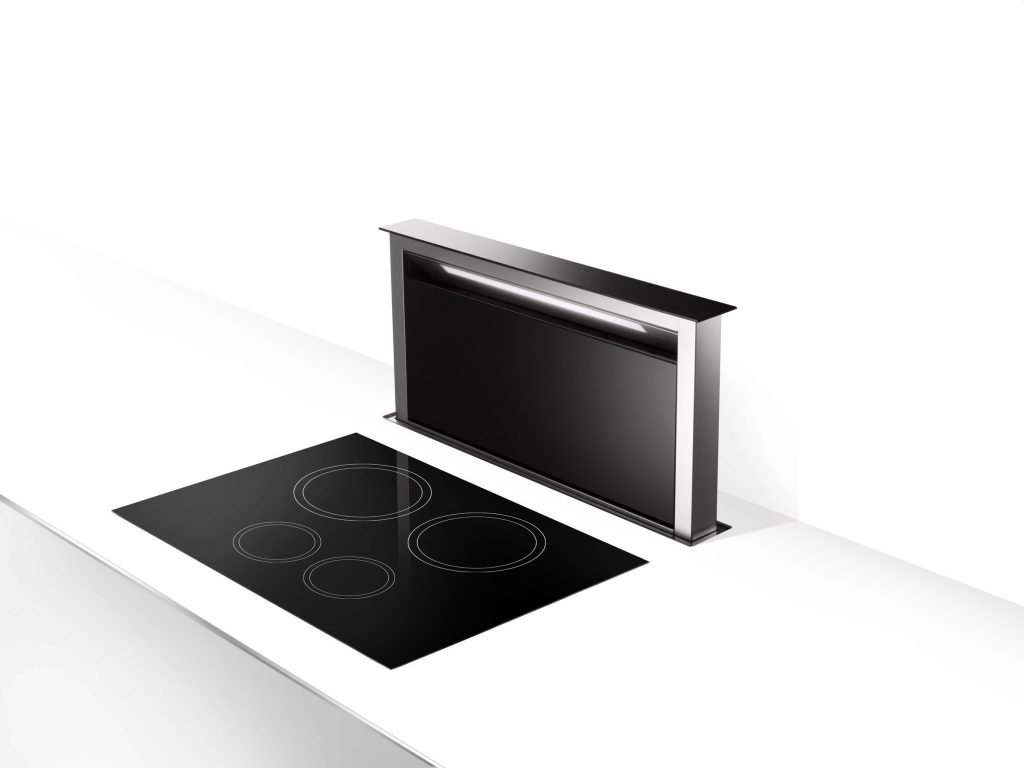
from $165 Downdraft vent & lift repair
A downdraft that runs and no longer pulls, or one that will not rise out of the counter. This maker invented downdraft ventilation and still sells it — and most of what stops one is not the appliance.
- Filter, damper and duct checked before the blower
- Remote blowers located, because they are not in the kitchen
- The lift mechanism treated as mechanical, which is what it is
-
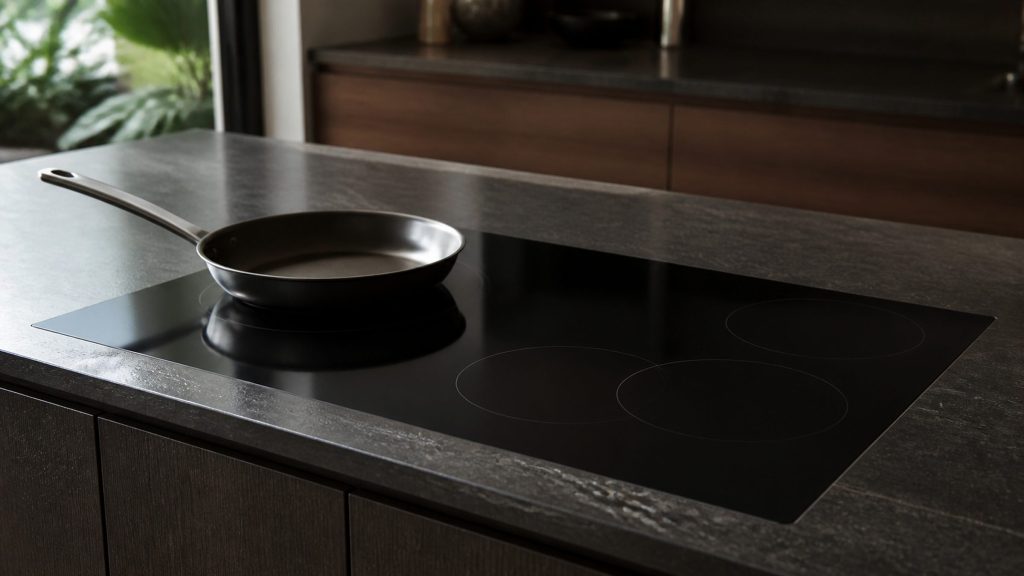
Induction · Radiant · Gas · Downdraft · Rangetops · Euro-Style · 30" · 36" · 45" · 48" Cooktops and rangetops
The widest row on this site: thirty-nine cooktops and fourteen professional rangetops, which are the same repair under a different word. Induction, radiant glass, sealed gas, and the downdraft cooktops that pull the steam down through the counter instead of up into a hood — an idea this maker invented and still sells.
- One induction zone cutting out while the rest keep going
- A gas burner clicking without lighting, or lighting and dropping out
- A downdraft that runs but no longer pulls
Questions people ask about this
Mine is from the nineties. Is it worth repairing at all?
Very often, yes — and it is worth asking rather than assuming. These were substantial appliances and the parts that fail most are the ones still commonly available. The other half of the answer is that replacing one is not a like-for-like purchase: nothing on the market today drops into that aperture with that ventilation arrangement, so a replacement is a cooktop, a worktop modification and a ventilation decision. That arithmetic keeps a lot of these in service.
The grill cartridge has stopped heating evenly.
Usually the element or its connection rather than the cartridge itself, and both are ordinary repairs. Uneven heat across a grill module is also worth checking against the obvious: the lava rock or radiant medium if yours uses one, and the drip tray, which affects airflow under the element more than people expect.
The downdraft is weaker than it was.
Same five causes as any downdraft, and three of them are outside the appliance: a saturated grease filter, a damper that has stopped opening, and the duct run. On a cooktop of this age the filter has often been washed a hundred times and lost its shape, which is a cheap part where it is still available. The blower motor is the least likely of the five and the one people assume first.
Can I still buy a different cartridge for it?
This is the hardest question on the page and the honest answer is often no. Cartridges were made for particular generations of the frame, they are the part most likely to have been discontinued, and used ones vary enormously in condition. If your grill module has failed and you were hoping to swap in a burner cartridge, ask before planning around it.
Is the ventilation enough on its own?
It was designed to be, and for the way these were installed — usually in an island, with no hood above — it generally is when the whole path is clear. What changes that is the path rather than the appliance: a duct that was altered during a renovation, a damper that no longer swings, or a filter that has never been washed. Weak extraction on one of these is nearly always the ducting rather than the design.
What should I do before calling about one?
Find the model number, which on a cooktop means a phone held up into the cabinet below, and say what the machine is doing in terms of which module. "The left cartridge does not heat" and "the downdraft has weakened" are different visits with different parts. On an appliance of this age, knowing which part we are chasing before setting off matters more than usual.
Cost Expectations
More guides like this one
-

The Door on Your Refrigerator Belongs to Your Cabinetmaker
Thirty-six of the sixty-five refrigeration models this maker currently sells are panel-ready, and so are most of the dishwashers and wine cellars. Two things follow that nobody explains before you own one, and both of them show up on the invoice.
Read more -

Why a Built-In Repair Costs More, and Why It Is Not the Badge
This subject is usually written to justify a number. Here is the honest version, including the part that works in your favor and the sentence we will not write: nothing on this site costs more because the appliance was expensive.
Read more -
Two Years Parts and Labor, Ten on the Sealed System. Check Before You Pay Anyone
This is a page that may send you somewhere else, on a site that makes its living from repairs. We would rather write it than take a call for work somebody else is obliged to do for nothing.
Read more
Tell us the model number and what it is doing.
This article is based on:
- Official manufacturer documentation
- Internal repair procedures
- Technician repair history
- Company quality standards