Common Problems
How Long These Actually Last in a Coastal Kitchen
The usual figures are a reasonable starting point: a built-in refrigerator ten to fifteen years, a dishwasher nine to twelve, a wall oven or range fifteen or more, a microwave eight to twelve, an ice machine or wine cellar around ten. In South Florida the ranges hold but the load does not. Air conditioning runs most of the year, the kitchen is warm around the clock, and a condenser here never gets the easy months a machine in a temperate climate does — so the same appliance does more work for the same result, and does it for longer each year. Salt in the air on a coastal property is the second factor, and the manufacturer names it: the current warranty excludes damage from high salt concentrations and high humidity, which is a manufacturer describing a coastal kitchen in its own document. What genuinely shortens these machines is not the calendar but a packed condenser, a door seal nobody tested and an ice machine nobody cleaned. And the arithmetic runs in the owner's favor at the other end: a built-in column is worth repairing at a figure that would end the conversation on a freestanding machine.
The full guide
How long do jenn air appliances last? The Numbers, With a Caveat
Typical service life, for built-in equipment of this class — and JennAir has been building this class since the cartridge cooktops of the sixties, so a machine of twenty is not a curiosity here:
| Refrigeration (columns, built-in cabinets) | 10-15 years |
| Dishwasher | 9-12 years |
| Wall oven and range | 15+ years |
| Cooktop | 12-15 years |
| Microwave | 8-12 years |
| Ice machine | around 10 years |
| Wine cellar | around 10 years |
Those are honest averages and they are also close to useless on their own, because the spread within each is enormous. Two identical refrigerators installed the same week can be five years apart at the end of their lives, and nothing about the appliances explains it.
What explains it is load and care.
What This Climate Changes
Not the numbers. The work behind them.
The kitchen is never cold. A refrigerator's job is to move heat out of the cabinet and into the room. The warmer the room, the harder that is. In a kitchen that sits warm around the clock for most of the year, a condenser is working against a higher ambient temperature than the same machine would face almost anywhere else in the country, and it does that in April as well as in August.
There is no easy season here. That is the whole difference.
Salt in the air. On a waterfront property this is a genuine factor and it reaches further inland than people assume. It attacks condensers, fasteners, hinges and any exposed metal, and it works on them continuously.
The manufacturer agrees, and says so in its own warranty document: cover excludes discoloration, rust or oxidation of surfaces "resulting from caustic or corrosive environments (e.g., high salt concentrations, high moisture or humidity or exposure to chemicals)".
That is a manufacturer describing a South Florida kitchen on its own paper. Worth knowing before you need it.
The storms. Every season brings outages and the surges that come with restoration. Control boards meet those, compressors are asked to restart against pressure they have not had time to shed, and a kitchen of nine appliances gets that treatment several times a year.
What Actually Shortens Them
Not the calendar. Three things, in order:
1. A condenser nobody has ever vacuumed. The single biggest factor and the most preventable. It breaks nothing directly. It simply makes the compressor work harder for the same result, every hour of every day, for years — and the compressor is the most expensive component in the appliance.
2. A door seal that stopped sealing and nobody noticed. The machine runs longer, works harder and pulls warm humid air into a cold cabinet continuously. Two minutes with a banknote finds it.
3. An ice machine nobody cleaned. In hard water, scale builds through the water path until the pump is the part that fails. This appliance is left alone more than any other in the kitchen.
None of those is age. All three are on the six-item annual list on this site, and all three are free.
The Long-Lived End
Worth saying, because it is cheerful and true: cooking equipment lasts.
A wall oven or a range routinely outlives everything else in the kitchen. There is far less to go wrong — no refrigerant circuit, no pump, no water — and the parts that do fail are ordinary: an element, a sensor, an igniter, a latch, a control board. Fifteen years is unremarkable. Twenty is common.
The cartridge cooktops of the eighties and nineties still working across this region are the extreme version of that, and there is a page on this site about them.
The Arithmetic That Runs the Other Way
Here is the part that matters when something does fail on an older machine.
On a freestanding appliance the calculation is simple: repair against a new one. A new one arrives, stands where the old one did, and often wins.
On a built-in it is repair against a new appliance plus whatever the cabinetry needs to accept it. The replacement has to match on width, depth, height, trim system and door swing. Across a redesigned product line it frequently does not, and then the joinery has to change — in a kitchen where the joinery may be worth more than the appliance.
That comparison keeps sensible repairs sensible for years longer here. A ten-year-old column with a failed fan is worth fixing. A ten-year-old freestanding refrigerator with the same failure often is not. Same part, same labor, completely different answer — and the difference is the kitchen around it, not the badge.
Making Yours Last
Nothing here is a service plan:
None of it is JennAir-specific advice dressed up: it is the condenser, the gasket and the filter, and in a Miami kitchen the intervals are shorter than any manual prints.
- Vacuum every condenser once a year. Refrigerator, freezer, wine cellar, ice machine. Ten minutes.
- Test every door seal once a year. A banknote and two minutes per appliance.
- Clean the ice machine. The most ignored appliance in the kitchen.
- Wash the hood or downdraft filter monthly, if the kitchen genuinely cooks.
- Set the clocks and clear the notices after a storm rather than living with an appliance that thinks it is still in an outage.
- Fix small things while they are small. A fan bearing gives weeks of warning. A panel that has begun to drop keeps dropping. Almost nothing else on these machines warns you at all, so the things that do are worth listening to.
The last one is the whole of it. These appliances rarely fail without a period of behaving slightly differently first — and the owners whose machines reach the far end of those ranges are the ones who noticed.
If it turns out to be a repair
What this leads to, and what it costs
Every job on this site is priced the same way: an on-site diagnostic first, the figure agreed in writing before anybody starts.
-

from $175 Appliance maintenance
One visit covering every filter, condenser, seal, grille, duct and descale in the kitchen. This row exists to keep the $695 row away, and in a house with a full suite from one maker it is the cheapest money on this site.
- Every appliance in the kitchen on one visit
- Second and third appliance far cheaper than the first
- Written down, so next year starts from a record
-

from $695 Sealed system & compressor repair
The largest figure on this site and the only one quoted last. Recovery, leak location, the repair, a new filter drier, evacuation and a charge weighed to the plate. Reached only after everything cheaper has been measured and excluded.
- Quoted only after the whole cheaper list is ruled out on record
- Charge weighed to the plate, not topped up by feel
- The warranty position established before any figure is given

Questions people ask about this
Does a premium appliance last longer than a mass-market one?
Sometimes, and less than the price difference suggests. These are built to heavier standards in the parts you touch — doors, hinges, racks, finishes — and they share a good deal of the mechanism with less expensive machines from the same corporation. What premium equipment reliably buys is the ability to be repaired: parts supplied for longer, service documentation, and a design that expects somebody to work on it. That matters more to service life than the badge does.
Is ten years old too old to repair?
Not on this class of machine, and the reason is the cabinetry rather than the appliance. Replacing a built-in column means an appliance that fits the same opening on width, depth, height, trim and door swing — and if it does not, the kitchen gets modified. That comparison keeps sensible repairs sensible for years longer here than on a freestanding machine, where a new one arrives and simply stands where the old one did.
What is the single thing that shortens them most?
A condenser nobody has ever vacuumed. It does not break anything directly; it makes the compressor work harder for the same result, every hour, for years. In a coastal kitchen those coils fill faster than owners expect, and the appliance never complains — it just runs longer, holds a little less well, and wears out its most expensive component early.
Does salt air really matter if I am not on the water?
Less, but it is not zero — salt carries a long way inland here. On a waterfront property it is a genuine factor, and the manufacturer says so: the current warranty excludes discoloration, rust or oxidation from caustic or corrosive environments and names high salt concentrations explicitly. That is the maker describing this region on its own paper, and it is worth knowing that the exclusion exists before you need it.
Should I replace everything at once when the kitchen is that age?
Only if the kitchen is being renovated anyway. Appliances installed together do not fail together, and replacing a working machine because its neighbor failed is money spent early for no benefit. The exception is a genuine renovation, where the ventilation, the apertures and the panels are all being decided at once — that is the right moment to make those choices deliberately rather than one at a time under pressure.
What about a house that is empty half the year?
It changes what to worry about rather than how long things last. An appliance that sits idle is not wearing out, but a refrigerator or wine cellar that drifts, leaks or stops in an empty house is discovered on arrival, and by then the damage is done. If the house is unoccupied for long stretches, remote thermometers are worth more than anything a repair company can sell you.
Common Problems
More guides like this one
-

Your Freezer Was Fine All Winter and Started Frosting in June
Nothing broke in June. Something was marginal all along and the season found it — which is a very South Florida sentence, and it points at two cheap causes before it points at anything else.
Read more -
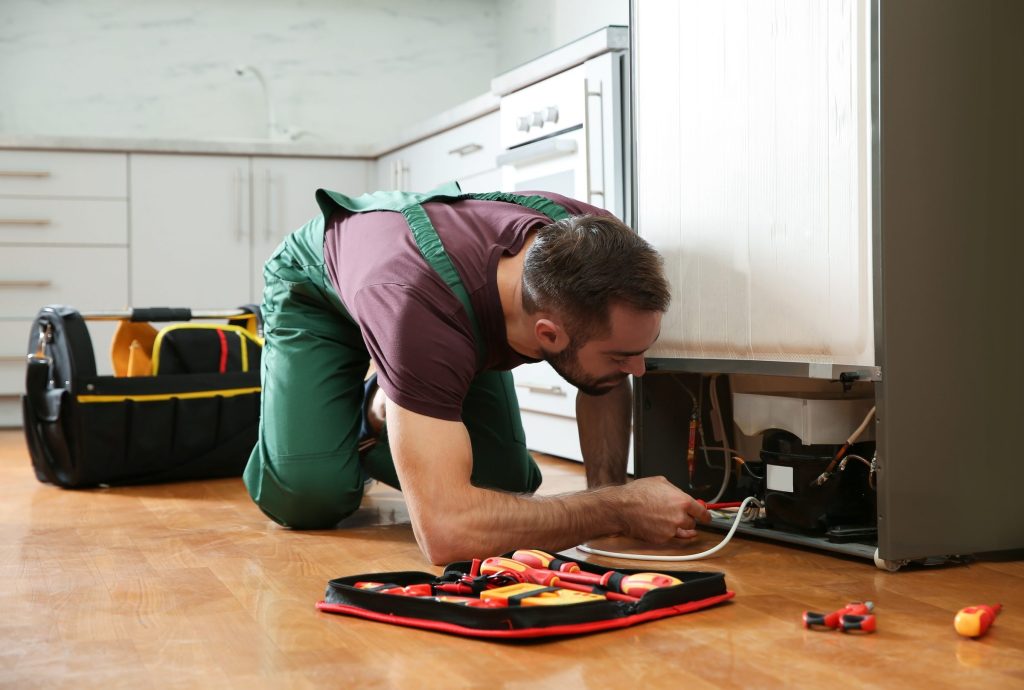
Clicking, Humming, Knocking: Which Refrigerator Noises Matter
Most of what a refrigerator does is audible, and almost none of it is a problem. The question that sorts one from the other is not what the noise sounds like — it is when it happens.
Read more -
A Warm Fridge and a Cold Freezer Is the Cheapest Sentence in This Business
Most people say the refrigerator has stopped. The useful sentence is narrower than that, and it moves the answer from the most expensive repair on the site to one of the cheapest.
Read more
Tell us the model number and what it is doing.
This article is based on:
- Official manufacturer documentation
- Internal repair procedures
- Technician repair history
- Company quality standards