
Cost Expectations
Two Years Parts and Labor, Ten on the Sealed System. Check Before You Pay Anyone
This manufacturer's current major appliance warranty runs two years on parts and labor from the date of purchase — longer than the single year that is standard across most of the industry — and refrigeration carries a longer sealed-system warranty on top of it, stepping down in stages out to ten years. If your appliance is inside any of that, the right call is the manufacturer's own line rather than an independent company, and it costs you nothing. To check, you need the model and serial number from the plate and, ideally, proof of the purchase date; without a receipt the manufacturer will generally work from the serial number, which encodes when the machine was built. It is worth ten minutes even when you are fairly sure you are outside it, because the sealed-system cover runs far longer than most owners expect and it covers exactly the failures that cost the most.
The full guide
Why a page about the JennAir refrigerator warranty sits on a repair company's site
We repair appliances for a living. This page may talk you out of hiring us, and we would rather publish it than not.
The reason is simple: if you are inside the manufacturer's warranty and we come out, diagnose the machine and bill you for the work, you have paid for something you were entitled to for nothing — and you will find that out eventually. A repair company being paid for a manufacturer's obligation is not a business model we want any part of.
So: check first. It takes ten minutes.
It is worth ten minutes in South Florida more than most places, because a great many of these kitchens went into a new house or a renovation that finished months before anybody moved in, and the warranty runs from the purchase rather than from the day you started cooking.
What This Maker Actually Gives
Two things are worth knowing, and the first one surprises most people.
Two years of parts and labor. The industry norm on major appliances is one year. This manufacturer's current major appliance warranty runs two, from the date of purchase, covering both the part and the work to fit it.
That single fact means a great many appliances that owners assume are out of cover are still inside it — particularly in a house that was bought new, where the kitchen went in a few months before anybody moved in.
A longer sealed-system warranty on refrigeration. On top of the two years, refrigeration carries extended cover on the sealed system, stepping down in stages out to ten years. The later steps typically cover the part rather than the labor, which is still a substantial share of the most expensive repair a refrigerator can need.
The sealed system is the compressor, the evaporator, the condenser, the dryer and the tubing that joins them. It is not the fan that blows air over the coils, not the control board, not the door, not the ice maker — those sit under the shorter parts-and-labor term.
Both of these come from the manufacturer's own current warranty documents rather than from anywhere secondhand. If your machine is older, the terms that applied when it was sold are the ones that count, and they may differ.
How to Check
1. Get the model and serial number. They are on a plate, and on built-in equipment that plate is somewhere awkward — inside the door frame, behind the lower grille, on the side of the cabinet opening. Photograph it rather than copying it out; the characters run together and one wrong one changes everything.
2. Find a purchase date if you can. A receipt, a closing document on a new house, a delivery note, a card statement. Anything dated.
3. Call the manufacturer's own line. Not us, and not a search result that looks like them. The number on your documentation, or from the maker's own website.
4. If you have no receipt, ask them to work from the serial. Serial numbers generally encode when the machine was built, and manufacturers commonly use that when no proof of purchase exists.
When the Answer Is "You Are Covered"
Use it. There is nothing further to think about, and this page has done its job.
One thing to be aware of: work done by somebody the manufacturer has not authorized can affect a claim on that appliance. That is the practical reason to check before booking anybody rather than afterwards.
When the Answer Is "You Are Not"
Then the ordinary questions apply, and the rest of this site is about them: what failed, what it costs, whether it is worth doing on a machine of this age, and what the alternative would be. On built-in equipment the alternative is rarely just a new appliance, which is a subject of its own.
You will also have got something useful out of the exercise regardless: your model and serial number, written down or photographed. Every conversation about a built-in appliance starts with that number, and it is behind a door where nobody can read it in a hurry.
The Case Worth Checking Even When You Are Sure
Refrigeration, on the sealed system. It applies to every JennAir refrigeration cabinet in South Florida under ten years old, whatever the badge on the door of the machine beside it.
Owners routinely assume a machine of six or seven years is long past any cover. On this make, a sealed-system failure at that age may still be partly covered — and a sealed-system repair is the most expensive thing that can go wrong with a refrigerator.
If your cabinet is not cooling and the diagnosis points at the compressor or the refrigerant circuit, make the call before you approve any work, whoever you are talking to. That is the single most valuable sentence on this page.
If it turns out to be a repair
What this leads to, and what it costs
Every job on this site is priced the same way: an on-site diagnostic first, the figure agreed in writing before anybody starts.
-

from $695 Sealed system & compressor repair
The largest figure on this site and the only one quoted last. Recovery, leak location, the repair, a new filter drier, evacuation and a charge weighed to the plate. Reached only after everything cheaper has been measured and excluded.
- Quoted only after the whole cheaper list is ruled out on record
- Charge weighed to the plate, not topped up by feel
- The warranty position established before any figure is given
-
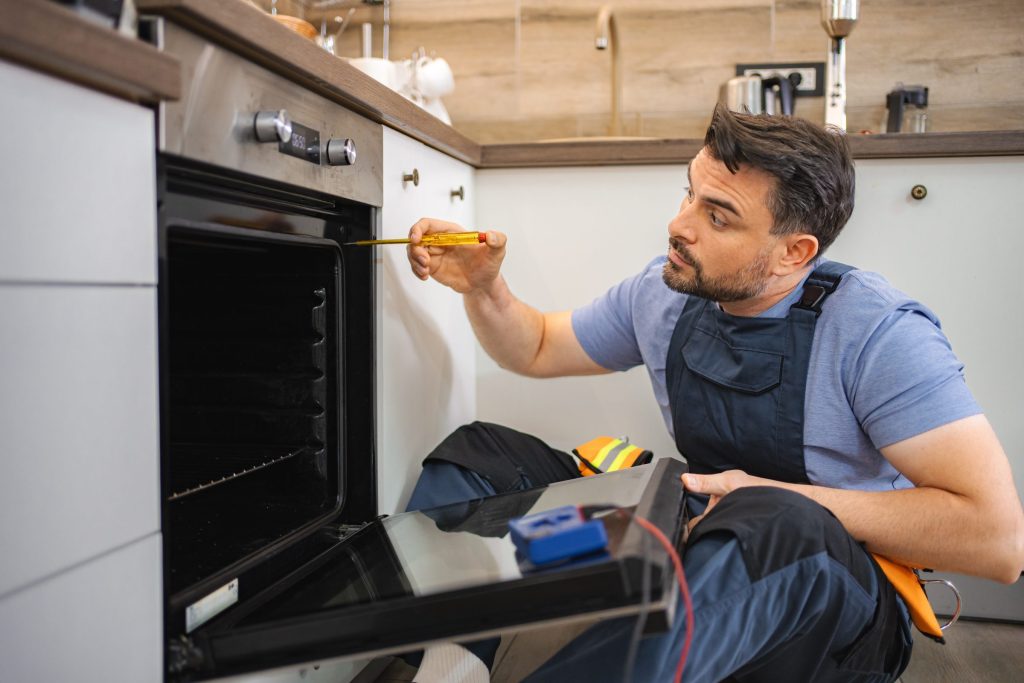
from $95 Diagnostic visit
We read what the appliance is reporting, then measure before saying anything about the repair. On a built-in kitchen that also means working out how the appliance comes out before anybody touches it. The fee is credited toward the work when you go ahead.
- The code read on site, and the free causes ruled out first
- Measured rather than guessed
- Credited toward the repair

Questions people ask about this
Why would a repair company tell me this?
Because the alternative is worse for everybody. If we take a call, drive out, diagnose a machine and then discover it was covered, we have charged you for something you were entitled to have done for free, and you find out afterwards. That is not a relationship we want. Ten minutes of checking before anybody books is cheaper for you and simpler for us.
I do not have the receipt.
The serial number generally carries the manufacturing date, and manufacturers commonly work from it when no proof of purchase exists — usually by assuming a reasonable period between build and sale. If the appliance came with the house, that may be the only route you have, and it is worth trying rather than assuming you have no case. Builders sometimes hold documentation for a development, too, which is worth a call for a machine only a few years old.
What does the sealed system actually mean?
The compressor, the evaporator, the condenser, the dryer and the tubing between them — the closed circuit that moves refrigerant around. It is the most expensive part of a refrigerator to repair and it is what the longer warranty covers. It does not cover the fan that blows air over it, the control board, the door, the lights or the ice maker; those sit under the shorter parts-and-labor term.
Does an independent repair void the warranty?
Work done by somebody the manufacturer has not authorized can affect a claim on that appliance, and it is worth knowing that before booking rather than after. It is precisely why this page exists: check first, and if you are covered, use the cover. If you are outside it, the question does not arise.
The appliance came with the house. Where do I start?
With the plate. Model and serial off the appliance, then the manufacturer's line, and let them tell you what they can establish from the serial. If the house was new when you bought it, the builder may have the purchase documentation for the whole kitchen. It is a fifteen-minute exercise that occasionally saves several hundred dollars, and the worst outcome is that you now have your model numbers written down, which is useful anyway.
What about an extended warranty I bought at the store?
Read what it actually says before calling anybody. Third-party plans differ enormously: some require you to use their network, some reimburse you afterwards, some exclude the exact things you would want covered. The one thing they all have in common is that using the wrong repairer first is the usual way people lose a claim.
Cost Expectations
More guides like this one
-

The Door on Your Refrigerator Belongs to Your Cabinetmaker
Thirty-six of the sixty-five refrigeration models this maker currently sells are panel-ready, and so are most of the dishwashers and wine cellars. Two things follow that nobody explains before you own one, and both of them show up on the invoice.
Read more -

Why a Built-In Repair Costs More, and Why It Is Not the Badge
This subject is usually written to justify a number. Here is the honest version, including the part that works in your favor and the sentence we will not write: nothing on this site costs more because the appliance was expensive.
Read more -

The Cartridge Cooktop in Your Nineties Kitchen Is Probably Still Repairable
A grill module that lifts out and a two-burner cartridge that drops in its place. This maker built them for decades, there are a great many still working in South Florida, and the honest answer about parts has two halves.
Read more
Tell us the model number and what it is doing.
This article is based on:
- Official manufacturer documentation
- Internal repair procedures
- Technician repair history
- Company quality standards